

Why do halfhearted European teams with half the talent, knock out any African team?
This has happened every 4 years, since nearly 100 years. Why??
Africans who love football think we are the biggest followers & knowers of the game, but like everything else on earth, football is influenced by race, geopolitics, capitalism and neocolonialism.
“More questions”
1. Why does Africa import coaches and export footballers?
Is it different from why we import medicines, and export doctors?
Or, why we import chocolate, and export cocoa?
How long will we continue to manage our football, (and economies), this way?
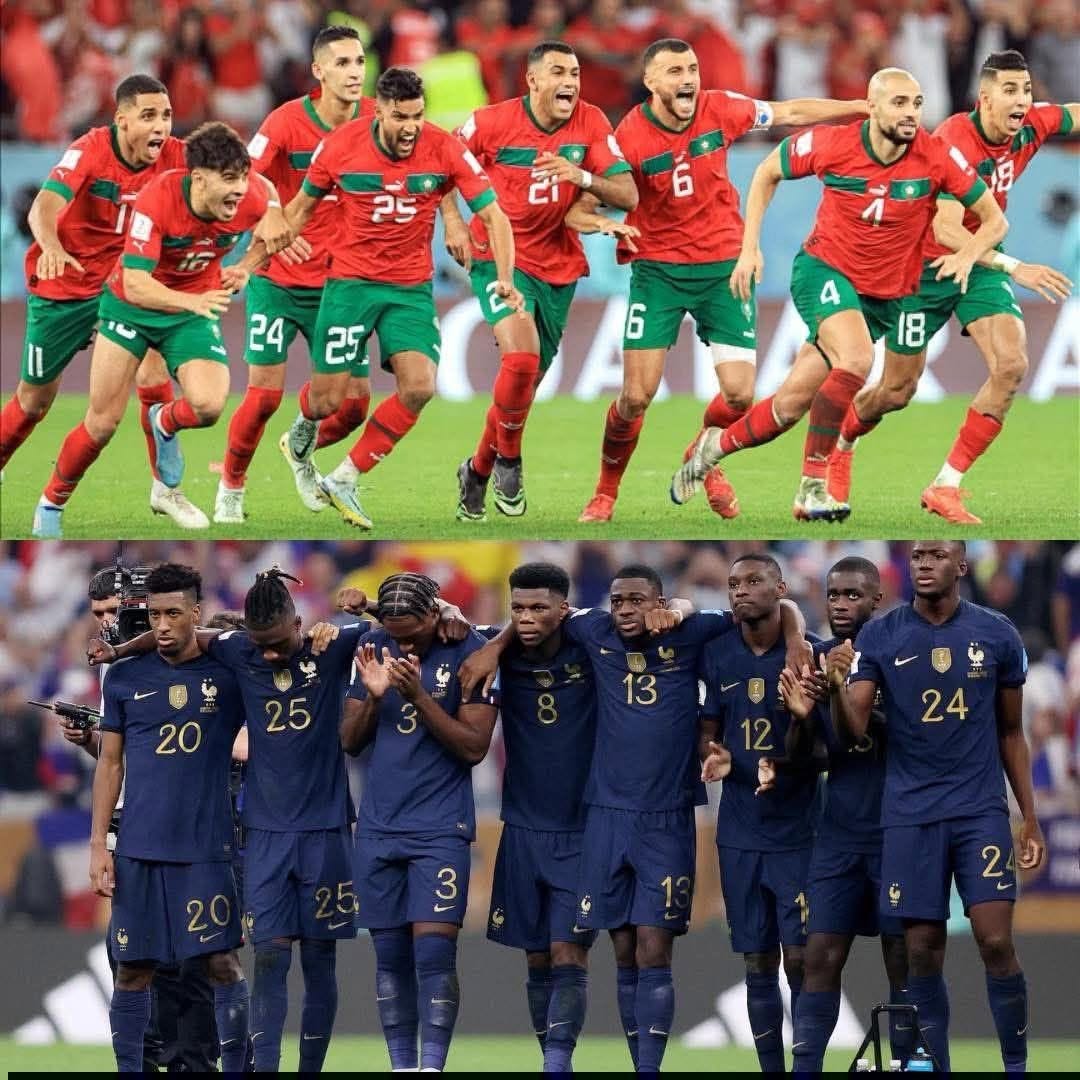
2. Why are European teams full of black players?
Blacks in Europe’s general population are not even up to 5 percent: yet, somehow, a whopping 21 of France’s 26 players are black.
England has 15 black players. The Netherlands has 14.
Belgium & Germany have 9 black players each.
Even in the host nation, black people are more in the football team, than in the US general population.
Why? No easy answers please. I’m looking for table-scattering answers.
3. Why do African footballers play so well, in terms of passion and talent, yet never win the World Cup?
Is this some kind of oyinbo juju? Are oyinbos simply superior?
All 3 questions asked, let’s play a game. Let’s call it the 3 Laws of Football.
Let’s go.
1. Football is a colonial and capitalist institution.
2. International football has fundamentally different rules from African football.
3. The European mind is spartan. The African mind is emotional.
These are neither good nor bad. Take it as context analysis.
“Mind over Matter”
The technical intricacies & military violence by which Africa was colonized since the 16th century, were supported by a psychological, cultural factor.
That is, the stark difference between the cold, calculating, ruthless, exploitative mindset of our strange visitors, and Africa’s own warmth, openness and generally relaxed world view.
Typical football fans may say “we don’t care! We just want to enjoy the game!”
But the evidence will show that our understanding of international football, is also playing out in our politics, our economies and our fate as Africans in the world.
While we focus on our enjoyment of the tournament, the razzle dazzle of the game, these Europeans still look at us with the same hawk eyed, soulless, mathematical calculation with which they first landed on the shores of the Niger Delta 600 years ago.
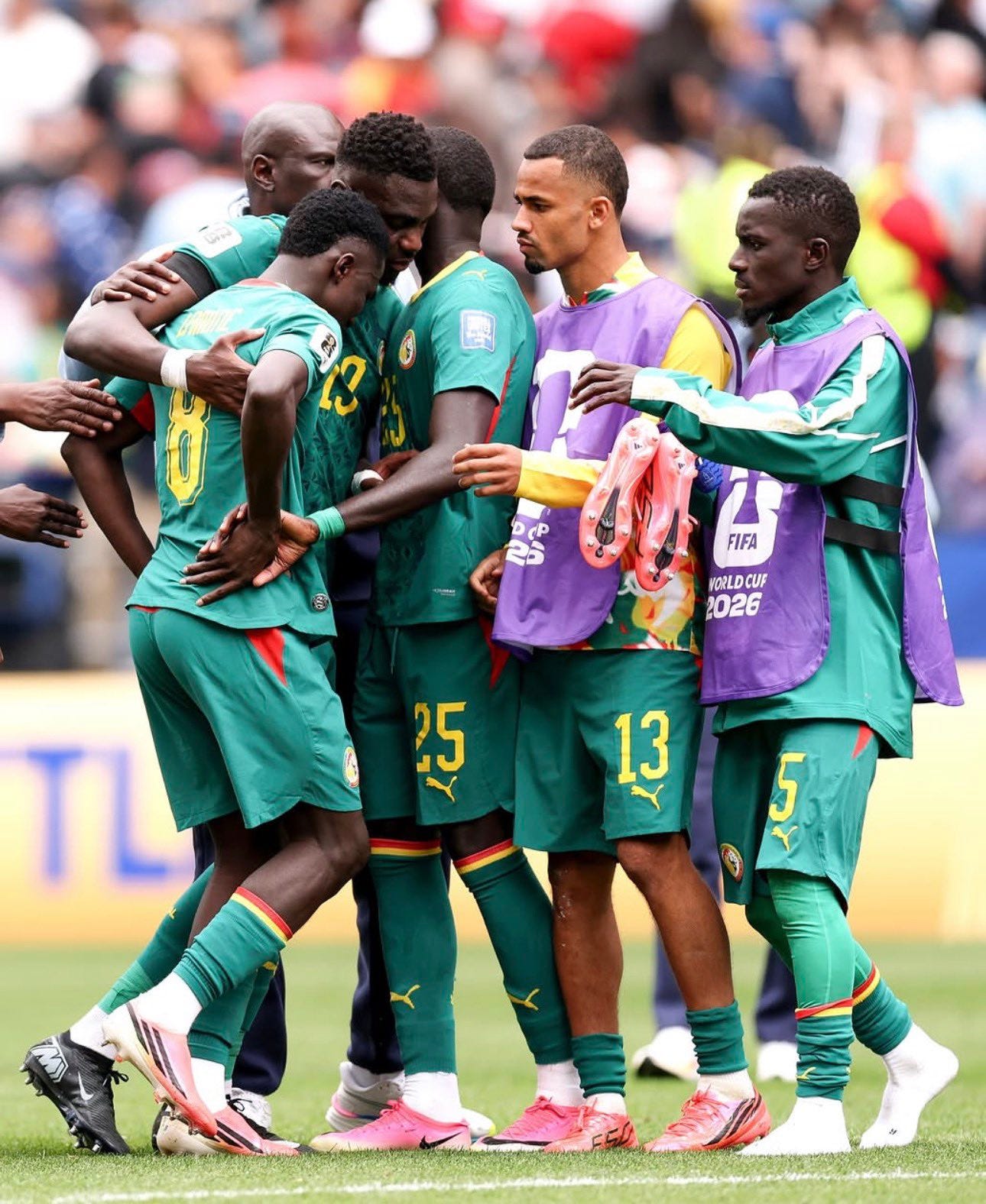
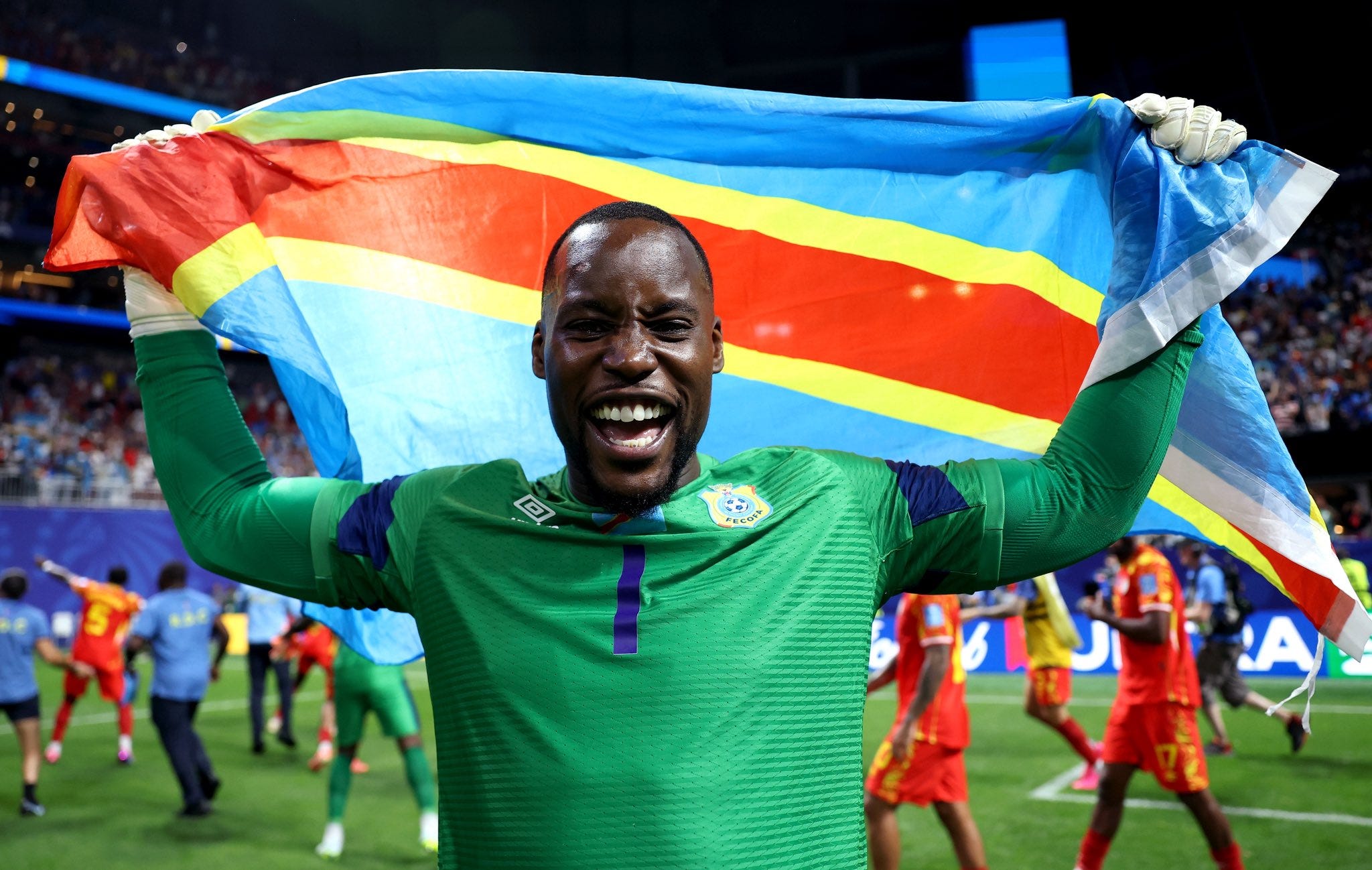
African teams like Senegal or Congo may win our hearts, and prove physical prowess, but Africa must learn to play international football as a mind game.
On top of our usual passion and physical strength, we need an ideological, tactical, psychological mindset.
Only the most mentally ruthless win the World Cup.
“Money, money, money!”
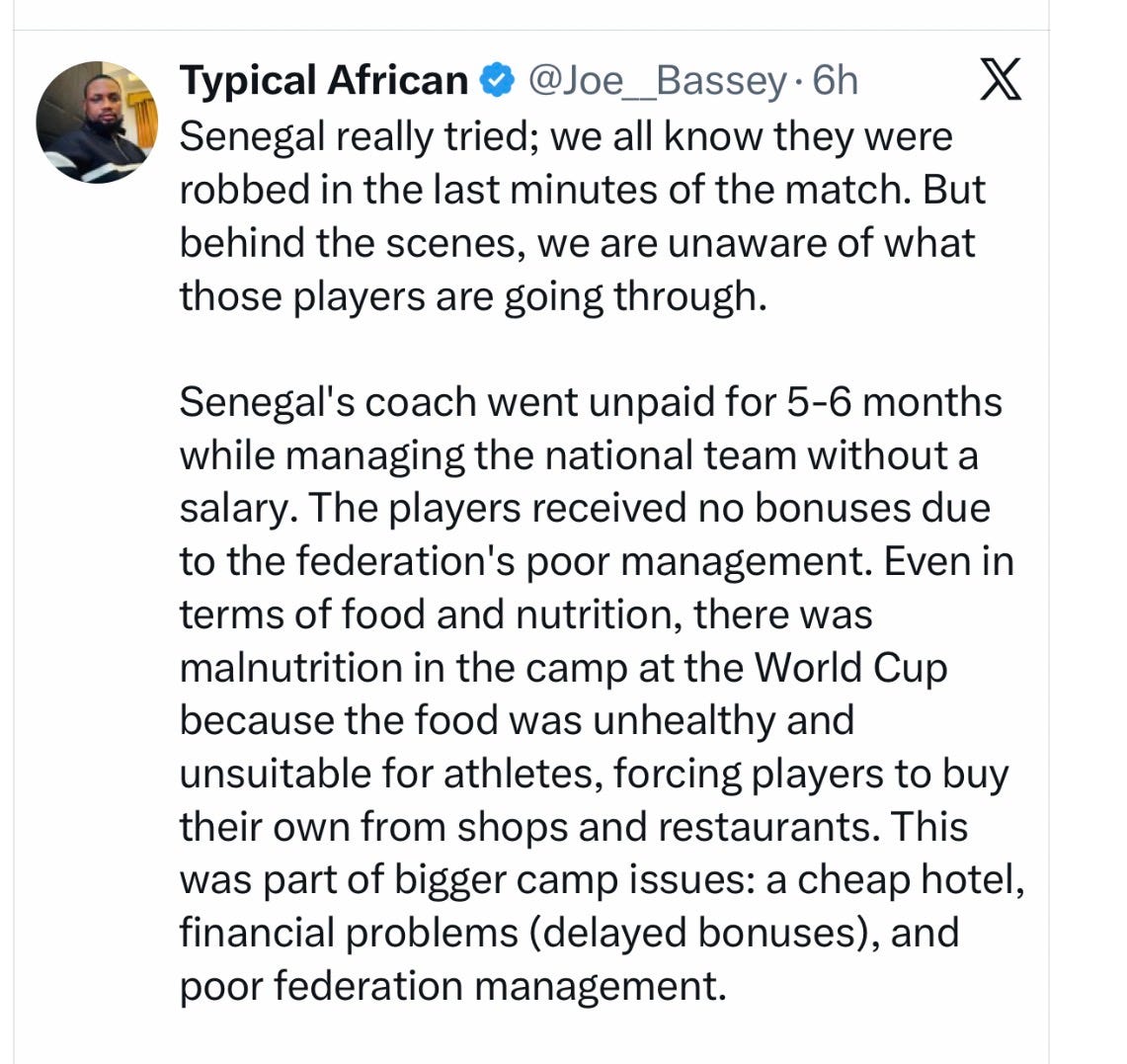
The other thing we need is financing.
Our own money, not FIFA grants. The same way we should stop depending on receiving foreign aid to develop our health sectors, or united nations programs to develop our education, or world bank loans for our agriculture and infrastructure.
Hire home grown coaches. Pay them. Pay players, and develop our economies and enough to end brain drain.
Make sports an economic sector, like oil and gas, or technology.
Forget accidental team building and magical hopes for globally competitive outcomes at every world cup. Finance year-round grassroots sport development in every local community.
Let investors invest in sustainable sports sector development that can yield stable, 4 yearly returns.
“History”
There was no African team at the inaugural world cup in 1930.
For 40 years, no African country was allowed at the world cup. Despite consistent applications from many newly independent African countries, FIFA allocated only one place to three continents: Asia, Oceania & Africa.
As we approach the 100th year of the World Cup, 10 African teams have been allowed for the first time.
If we choose to participate in something that was clearly designed without us in mind, then, we must stop playing as if it’s our system, and start to learn why for a century only the makers of that system are still winning the world cup.
“The Global Game”
The answers are not different from why the global economy develops some countries while impoverishing others. You either believe poverty is a moral flaw, or “corruption” is a neat answer, or you begin to consider that maybe capitalism and neocolonialism are working the way they were designed?
Likewise, is Africa’s performance at the World Cup a result of our physical inferiority, or lack of talent?
Or, are we just dancing at a party we were invited to without first learning the dance?
Africa can win the World Cup.
But first, we have to ditch the emotional game. The hustle and flurry that starts powerfully but dissipates before each match is over.
We must stop consoling ourselves every time: “at least we played well!”
We must decide that international football plays to a different set of rules than our rofo-rofo soccer skirmishes on the dusty street sides of Lagos, Dakar or Kinshasa.
International football has never been about talent, passion or strength
If it was, Congo would’ve held on to its 1-0 lead, maybe even doubled that in the 2nd half, maybe sent England packing.
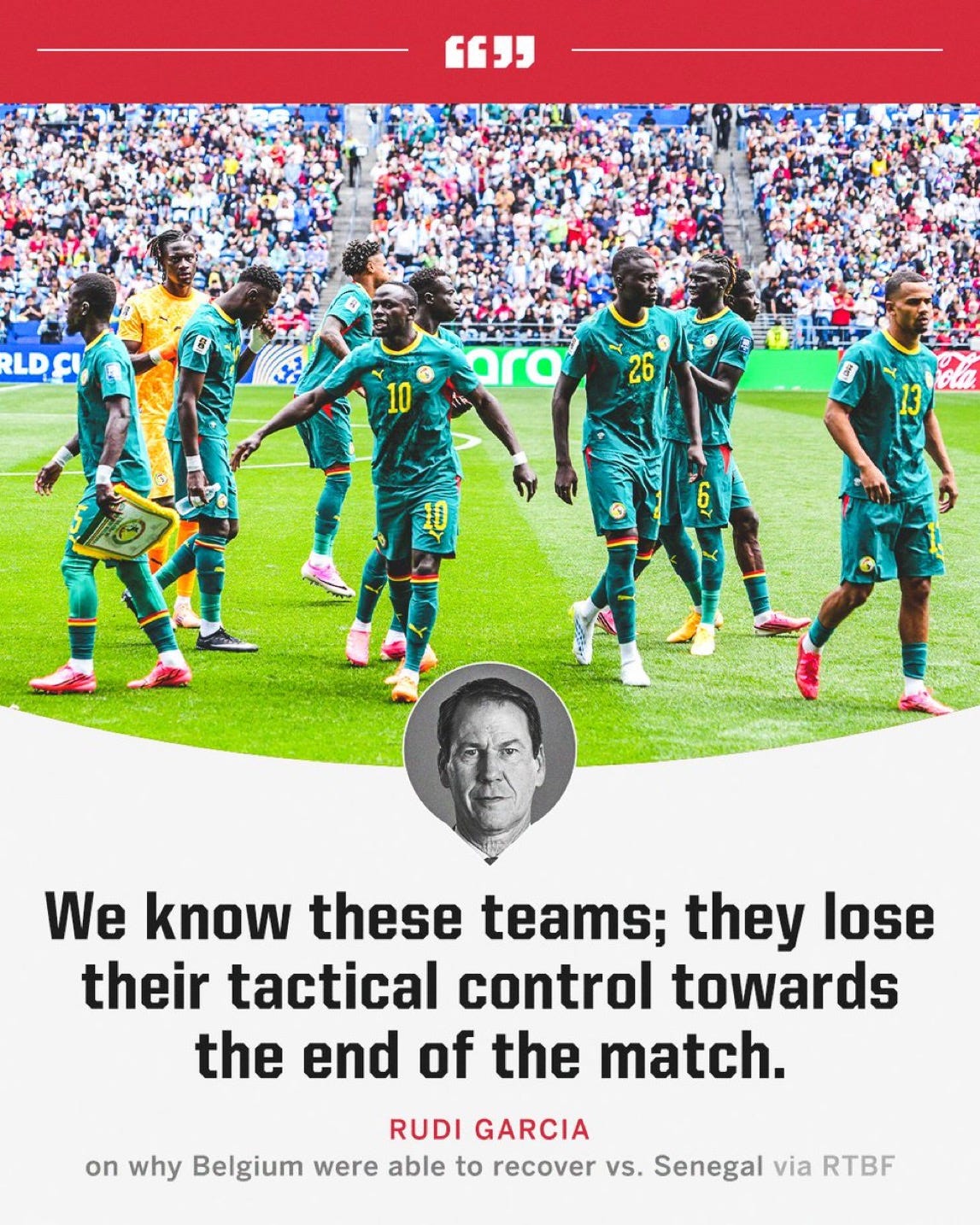
Instead of blowing its 2-0 lead, then conceding 3-2 in the final minutes, Senegal would have qualified against Belgium.
But the colonizer eventually takes the game,
Like their take our resources.
Europe’s economies depend on Africa’s cobalt, uranium and many more materials, even as Europe’s teams depend on Africa’s footballers. And, they will keep developing at our expense, while we play for crumbs, as long as we keep playing the global game with local mindsets.
What European teams are looking at when they play on the global pitch is different from what African teams are looking at. That’s why no matter how “strong” we are, they win.
For 600 years, it’s always been mind games between them and us.
Or tell me, what do you think?
Aside from the historical aspects of how the game has been developed (primarily in Europe) and the empirical relationship between the Europeans and African countries (all of which were designed to take much more from them than was ever given), which is the root cause of most of our current global problems, the football question seems much more complicated than history might suggest.
In the UK (and most other European countries) there are many native-born black players as well as those from other continents - Africa being one of the most prominent - and many of these players join teams for personal fulfilment of their potential, they want to play in the best leagues alongside and against the best players - of black, white or any other heritage. The fact that there are so few opportunities in their own countries encourages them to look further afield so they can earn much more than at home. They develop their skills to a similar level to others in those leagues so should be competitive when they play for their own countries. I see that, in this World Cup, some African teams are made up of a number of players who play outside their native countries.But this also applies in many European and South American teams. To my way of thinking, the main difference is their country’s football authorities are at least ten years behind in terms of creating the conditions for a healthy football industry. This can be blamed on many factors all of which contribute to the argument that African countries are disadvantaged when it comes to being competitive in any major tournament outside Africa. I see this changing as time goes on and maybe FIFA should put more resources into developing the structures of the game across the African continent and even push for a tournament in several African countries but that would require a significant investment- and there are much more important issues to deal with before that could happen. It would certainly help raise the quality of the game globally and give African players more opportunity to play the game in their own countries at grass roots level although for quite some time yet they will need to improve further by going to other countries, which enriches the game for everyone.
As a layman football fan, I, like many others are somewhat disillusioned with the sport in the UK because there are far fewer home-grown players being given the chance to develop because the industry (football agents mainly) are dictating the market and exploiting the financial system that causes these problems on both sides of the argument about who plays where and where the money goes that could be used to develop the game itself rather than the already well established industry around it.
There are many things wrong with the game but plenty of black players are making the most of it and a few are even trying to use their influence (and money) to help their own countries develop the facilities to give young players the chance to emulate their heroes. Governments need to recognise the opportunities and support the development of the game. But until African countries are stable enough to be considered safe for such investment the problem will continue to persist. Global politics of course will dictate how things pan out.