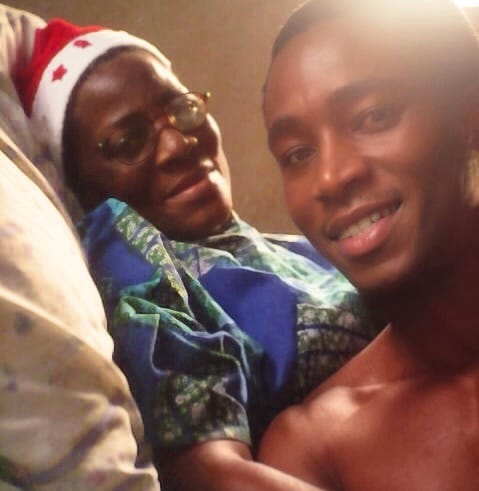
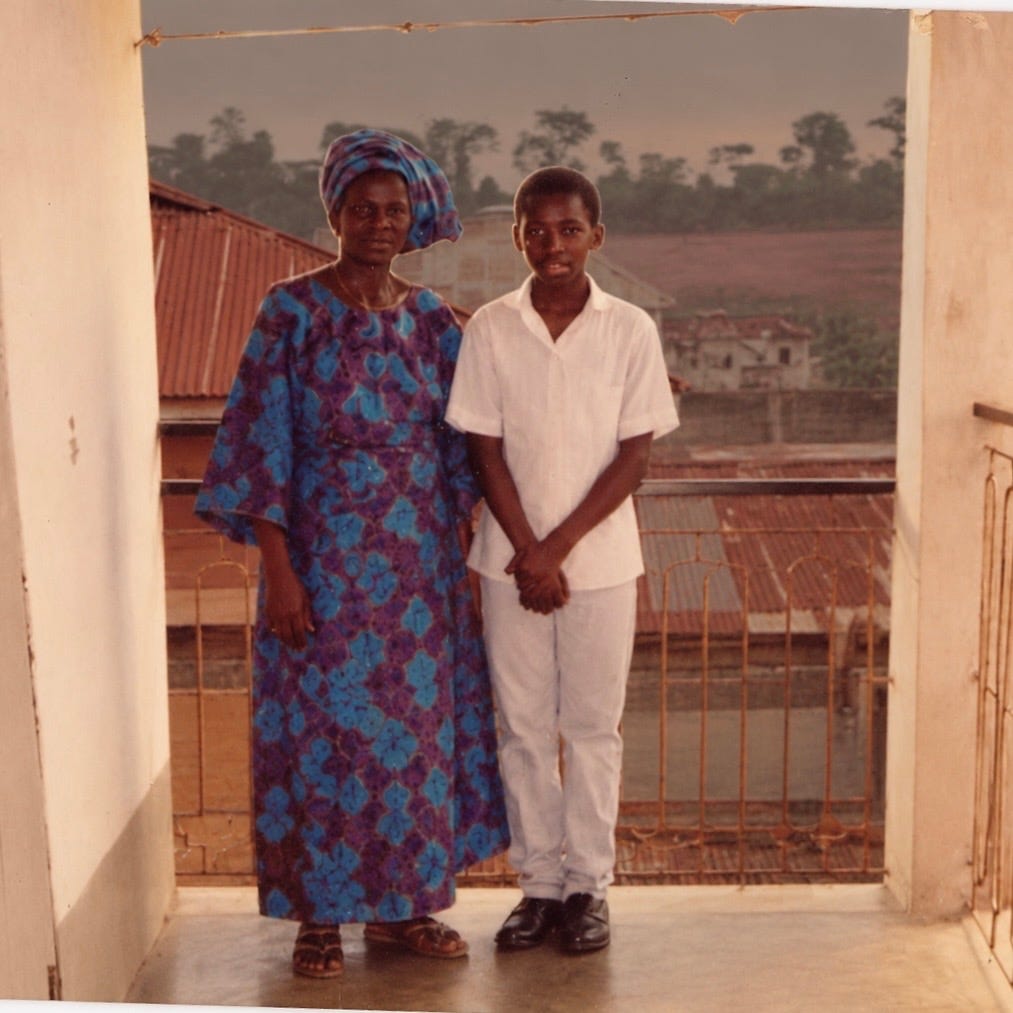
Once upon a time, my grandma, she was the most amazing person in the whole world.
Of course, I didn’t know it. Then, I was just a little kid. Little kid who enjoyed demolishing massive mounds of fresh fufu that she’d moulded and then pounded from freshly harvested cassava. Dark green vegetable stew fried in fresh palm oil, direct from farm to table, doing one hundred things to parts of my palate I hadn’t known existed. Tingling my nostrils, raw sensations I haven’t felt again.
Now that I live in Sweden, I understand her.
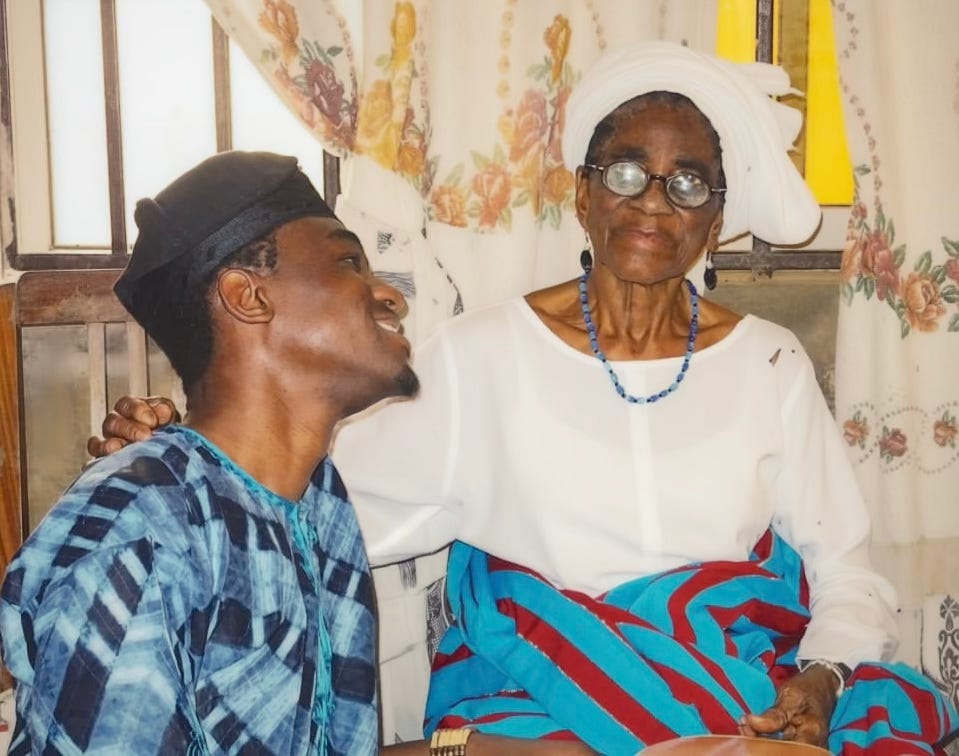
Grandma was Nigerian before Nigeria was Nigerian. At the last thunderclap of the first World War, she was born in the Niger Delta, a Garden of Eden before oil and profits turned nature’s richest DNA laboratory into literal hell.
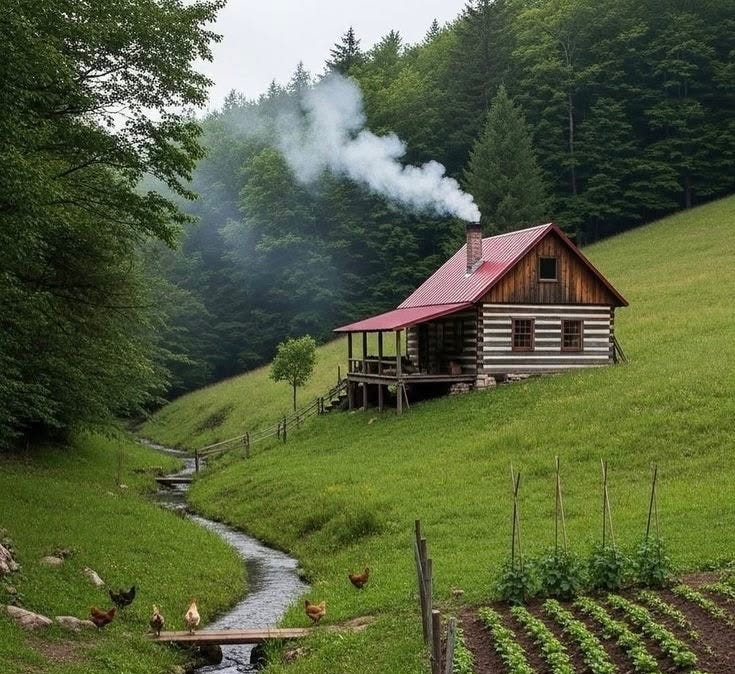
Before hell, the Delta was green. As was the countryside of Ondo State, where my Grandma later lived. Married to my Yoruba grandfather, she raised 5 children here, in these green hills, forested as far as the eye could see. Elephants were there. I never saw them, but my late grandfather’s was named Big Elephant Hunter. Green hills, dark forests, a magical time before capitalism killed nature.
Now as I experience the rich countryside of Sweden, I am drawn back into Grandma’s cozy, slow paced, rich green countryside.
Everything in Sweden reminds me. Grandma, who never contemplated Sweden, did live in Kwale, and Sapele, even Agbor, and all the way through the southeast and across the southwest, Ilesha, Ibadan, Lagos, then all the way up to Lokoja, Abuja, Kaduna in the North. Polyglot before the word, she spoke 6 languages. including English. Polymath before it was special, multitasker and multiprenuer, and face of independent feminism before any textbook taught it. Smart as a whip, neat as a pin, always impeccable in manner and dress, wholly Nigerian yet Swedish before I knew what that was.
I knew her kitchen, first of all.
Not what we call kitchen, nowadays. Not what my friend in one of these expensive apartments in Big Lagos keeps complaining about - the new ‘kitchen islands’, where you cook right in the middle of your living space. Modern, they say.
But, Grandma had an outhouse. An entire separate cooking arena, industrial in scope, if not in machinery. The first chimney I ever saw, before that word itself entered my vocab, was there. No chimneys to see in my parts of Ibadan or Lagos, but decades later, when I saw chimneys in rural Netherlands, I was like, oh! a chimney!
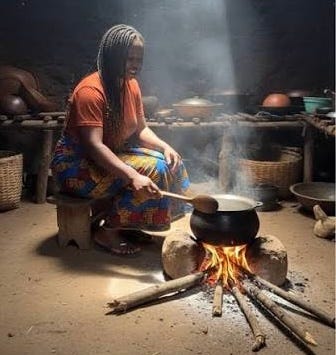
The kitchen outhouse was a dark, smoky-sweet space, where Grandma bent over a giant steel cauldron, over there in the fireplace, at the right corner. Open hearth built from clay, charred with years of burning freshly cut firewood, cut with an axe, by herself, in the back of her courtyard. Heaven’s aroma, scent of burning forest-fresh wood mixed with atarodo and epo pupa, to design one of those life transforming stews only a Delta grandma can craft. Soups that are nowadays likely extinct, to this microwave generation of packed and processed 10 minute meals.
Oh! the waft and weave of cuisine from that outhouse, all the way across the courtyard, on the large hand-painted steel trays she placed her ceramic plates and bowls in, as she brought the food in to the living room, one tray at a time, for 3 little children, sometimes, 5, even more, depending on time of year and who was visiting. Here in the bagarstuga in my Swedish village, every smell still takes me back to Grandma’s outhouse. “That’s Grandma”, i think to myself, when I observe Sweden’s centuries old cooking architecture, brick upon brick. I may have been the first black person to make tunnbröd in a Swedish open hearth, but the skills were there whenever Grandma allowed me watch her make magic, long long ago, in her outhouse kitchen.
And her latrine. Yes, latrine. In those days, I didn’t like it very much. But, then, it was a much better idea than shitting in the bush like many people did. So, Grandma built another outhouse, in a row of one bathroom house and two toilet houses. One toilet for her, the other for her late husband’s family, who lived in the next compound. Because pit latrines conflicted with the vitreous china WC’s from Armitage Shanks that were normal back in Ibadan, I developed the habit of constipation. Day after day spent avoiding being alone in the stillness of the grey concrete latrine outhouse, with a window in one wall, a hole in the floor, and a wooden seat cover.
I imagined crocodiles. snakes. anything, to bite my little yansh. And, when I did make it in there, 2 days after mentally repressing nature, there were no animals in the latrine. Not even a fly, or a cockroach. Grandma, with the help of her houseboy, kept the place as clean as if it were a hospital. My mental crocodiles would not have stood a chance against grandma’s daily palm brooms, water and disinfectants.
Nowadays, when I pass through Swedish countryside, I see these outhouses. I probably understand them better than I should. When I’m told the environmental argument for less water waste, and the health argument for better spinal posture, I realize what Grandma was showing us, decades ago.
Next to Grandma’s latrine was the bathroom. Unlike the latrine, there was no hesitation here. Concrete walls, screeded in cement spackle, were lined with a wooden shelf of some fresh, some perfumed skincare products.
Aromatherapy before that became a word.
From her cauldron in the kitchen outhouse, Grandma fetched a metal pail full of hot, hot boiling water. To my Ibadan brain, this bath water was far, far too hot. But I guess I didn’t yet understand winter. Okay, not winter as in Sweden, but here in this mountainous village, surrounded by hilly green forests all the way, our Decembers were cold as fuck. The boiling hot water in grandma’s heavy forged iron pail quickly lost 20 degrees of heat as she swung it on her way through the chilly courtyard. She dropped it in the bathroom, and gave me a quick stare that meant, stop playing, get to it.
Often, it was me and my little brother, showering together, but other times, I was last to get up, so alone in the bathhouse. The first scoop of hot water was careful, gingerly, but after a few more timid attempts, I had begun to enjoy the searing cascades. The bathroom gradually filled with steam so that I could hardly see the door anymore. So i turned and stared through the tiny open window, and watched what the villagers were doing, even though they couldn’t see me.
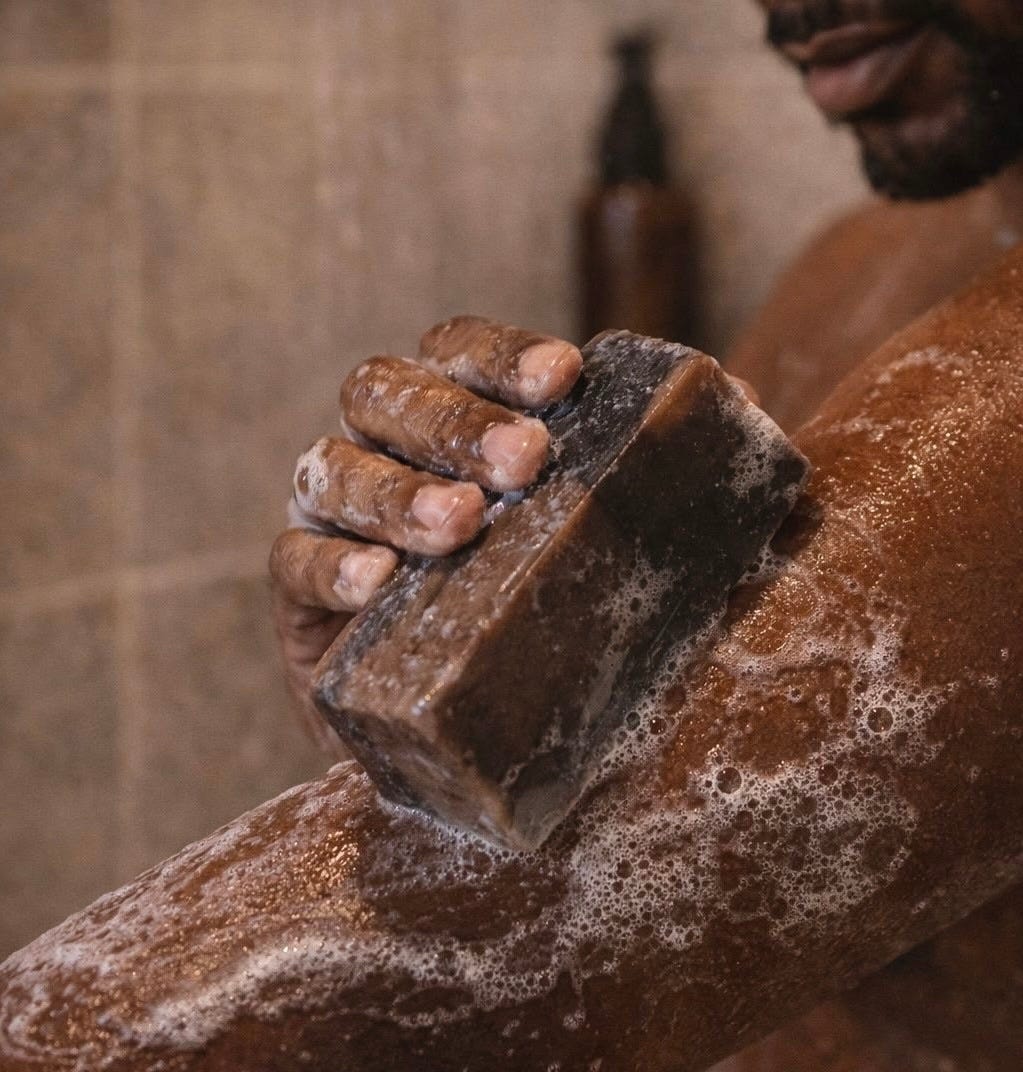
The hot water was so, so clean, it reflected the room, like a silver mirror, as if I could watch myself shining on my own skin. I lathered lazily and luxuriously with soft, freshly made black soap, although, on the shelf, there was also the perfumed soap from Avon which grandma’s American daughter in law had sent. Nowadays, west Africans who live in Europe desperately depend on shop-bought Dudu Osun, to keep our delicate tropical skin alive in the harsh climate, but my black soap was made by hand, and far, far superior.
The loofah was from a tree at the side of our street. But, only yesterday, my favorite retailer in this Swedish village cajoled me to buy a loofah. He said it was a new age revelation, and told me all the benefits this loofah would bring to free my skin from the mediocrity of capitalist beauty standards. I wanted to say “grandma’s loofah was free, straight from the tree”, instead I simply paid the 50 krone, to enjoy once again what I once felt for free, in grandma’s massive outdoor bathroom.
Then, the short walk from that warm, steam drenched bathroom, across the harmattan frigid air of grandmas courtyard was such a shock, that I ran quickly, into the warm safety of the main house. Nowadays in Sweden, we pay for sauna and spa therapy. You get steamed up in the sauna, then jump right into a cold river, or a pool, or dunk ice cold water from a bucket. Spa shock is supposed to do wonders for the skin, and endocrine, and cardiovascular systems, they say. But Grandma was the first to give me outdoor sauna and spa. Decades later, my skin is aglow because it had an early start with the world’s best grandma.
And, Grandma’s main house wasn’t fancy, but I daresay it may have been the best house. A long hallway, open on both ends, except for light wooden frames with mosquito nets. Airflow was abundant, as was the lighting. Light and space may be be modern architecture concepts, but grandma already did it. In the 8 rooms on either side of this hallway, the windows were wood, with slits through which I watched the neighbors without being watched back. And, the neighbors did bad things. Bad things, which I'm not allowed to say. Things so bad, that even when they shut their own windows and I could no longer see them, I definitely could hear all their rather awkward noises. These village people never did anything quietly. And, as for the actual doings, they were often preceded with meticulous, loud arguments, even actual physical fights, before the two lovers disappeared into their rooms and settled the drama in a more passionate kind of wrestling, that left them needing to open those windows again.
All this I have understood by keeping my nose to the wooden panes, but only for fresh air, I assure you.
At night, the wooden windows were shut. The main entrance and exit foods to the long hallway, which were never closed during the day, were shut tightly now. In the still of the night, there was more drama, but of an eerie kind, as faceless thugs from rival parties tended to maraud, house to house, stoking up political tension. It was the bad old days of Nigeria's wild, wild west.
Now that I think about it, I think Grandma may have qualified to be upper class, at least in the view of those next door neighbors, but maybe we we're just an ordinary family with an extraordinary grandmother? My own parents were bloody civil servants still hustling far away in the big city, and no one in my family had a big bank account, except of course you count grandma’s big heart, and the many millions of hugs and kisses she gave me.
So, grandma is in heaven now. Heaven, not the one with winged angels in flight, but a green forested, magical homeland where grandma’s grandma, and all my other relatives still watch over me, no matter where I am, Sweden or Nigeria, hoping I remember them, and slowly grow into someone just as wonderful as Grandma was.
I’m working on it.