

I live in Sweden.
First thing that struck me is how much this place reminds me of Nigeria.
Strange, you say?
After living in 30 countries, including more than half of Europe, this is the first time I’ve seen one country that reminds me of where I was born.
🤔
Yes, I understand standard western narratives make this a strange observation. My point is not that the economy of Sweden reminds me of Nigeria. But there are certain things about the traditional Swedish mindset: the closeness to nature, the slow pace, the communal and family bonds, and the simple but efficient work ethic, that regularly trigger deeply buried memories of the Nigeria I grew up in.
On the other hand, Nigeria of today might as well be a different planet. I hope someone reading this has the same faded memories of a time before we lost our way. I hope younger people who’ve never seen a functioning Nigeria can learn that this new way is … new.
And ask, where did we go wrong?
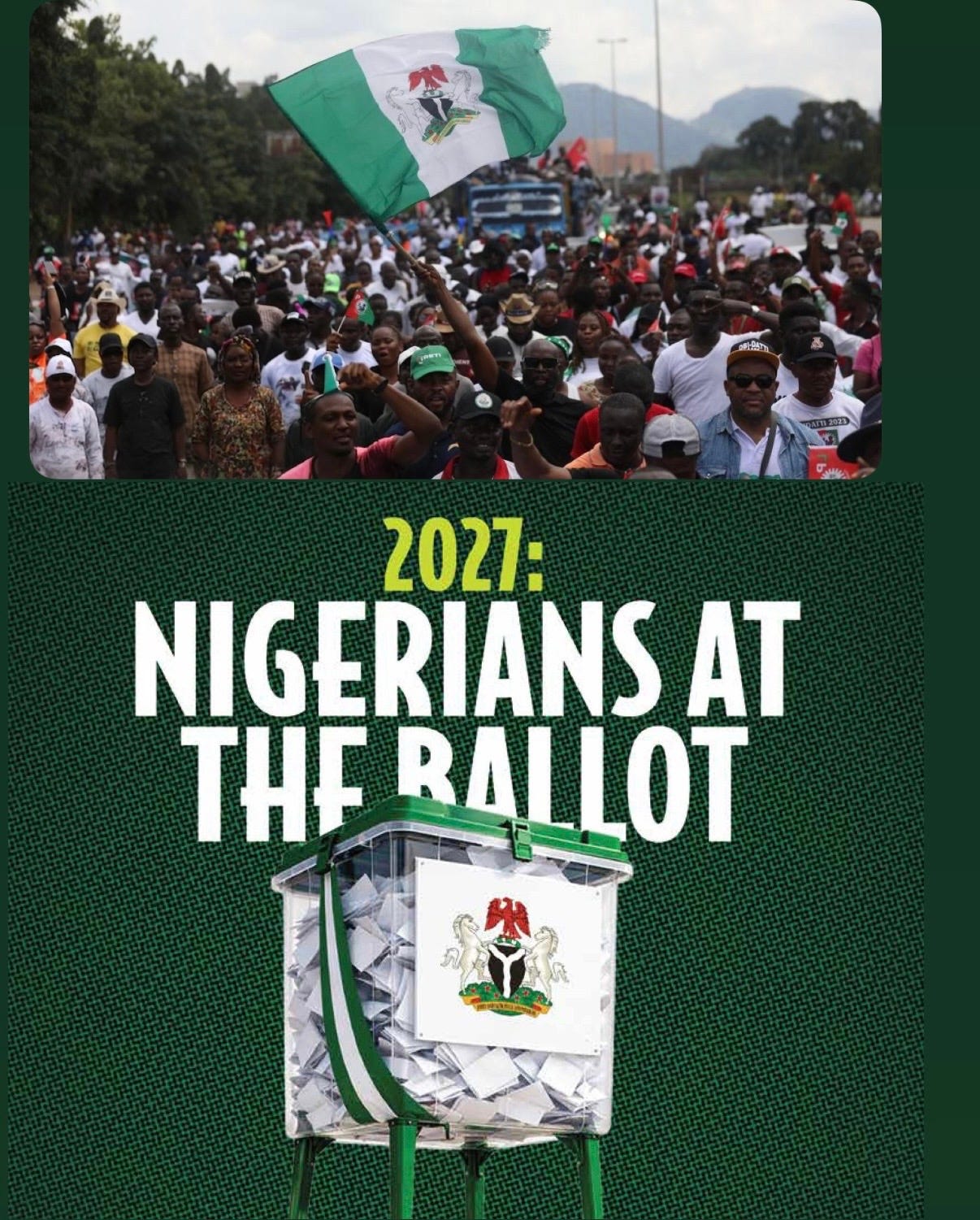
Ask, at the ballot.
Next to Sweden is Norway.
I pop in and out of Norway the way Nigerians pop in and out of Ghana. No biggie. And I study the subtle nuances between Europeans as we back home also study why a Fulani is not an Igbo or a Zulu is not a Luo.
The other thing Nigeria has in common with Norway is … football.
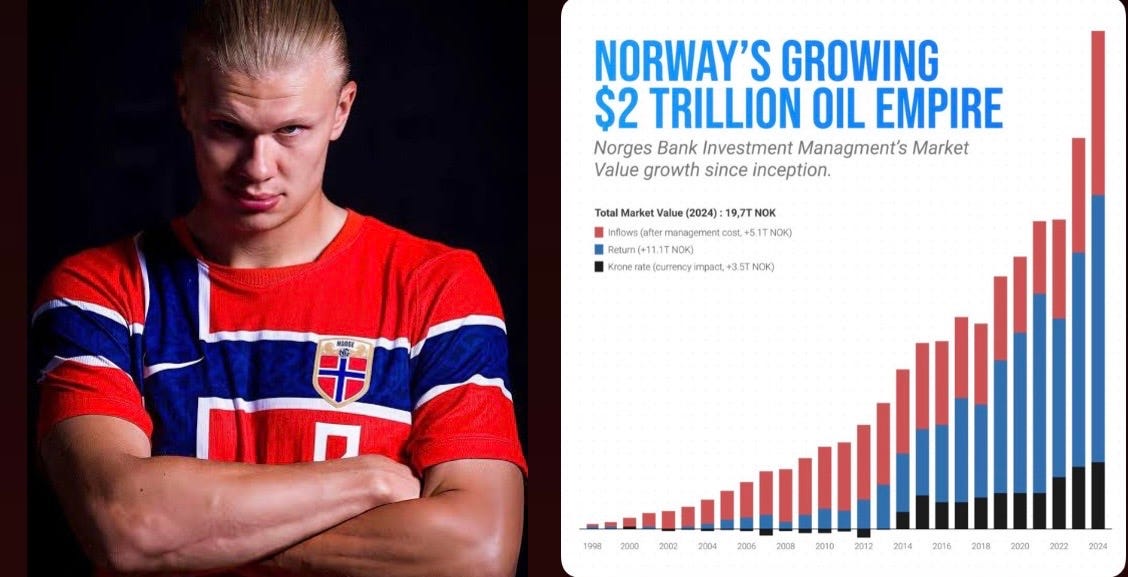
Many Nigerians know Haaland.
Here, the premier league striker & Norwegian professional is like pure water. His face is everywhere. In fact I believe that was him I saw in traffic yesterday night 🤔. Or not.
Thing is, many Nigerians know far, far more about Haaland, and football, than about Norway, or its economy.
Norway is also like Nigeria because both countries have a lot of oil.
In fact, Nigeria has significantly more oil than Norway - over 500 percent more.
But, Norway's nominal GDP per capita is roughly 70 times larger than Nigeria's.
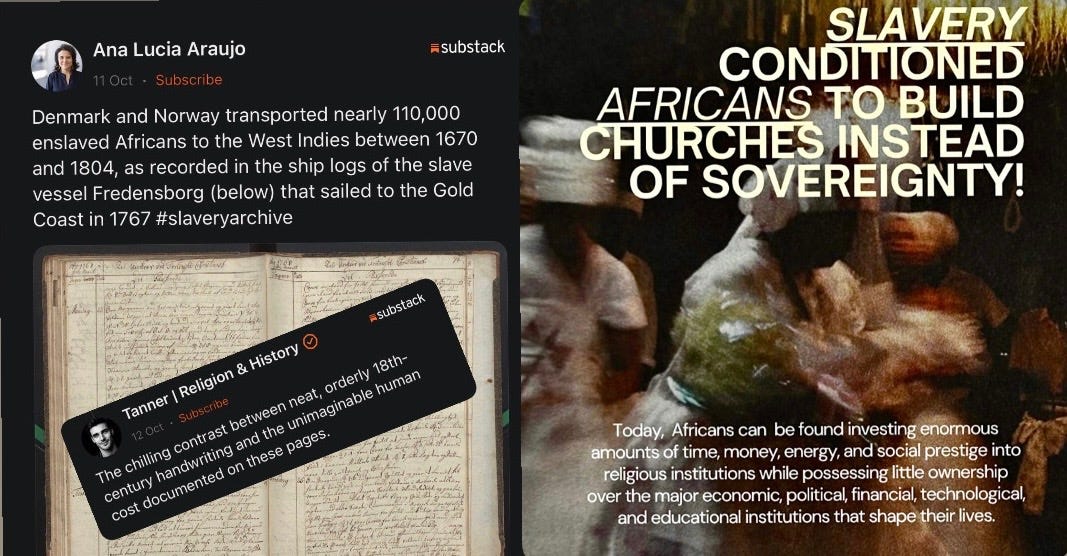
Why? They don’t have 2 heads, like Mummy used to ask. It’s not because they are ‘better’. It’s not a moral advantage. Norway traded in enslaved humans. It is Africans who have a warped expectation of good versus evil. In the real world, countries only act in their best interests.
What they do have, is what makes Norway and Sweden different from Nigeria.
Let’s dismantle 2 assumptions.
One, natural resources make a country rich.
Two, corruption makes Africa poor.
In fact, Oil money should not be spent.
Nigeria uses our oil money as a slush fund. Endless, bottomless pit of money. That is the difference. But: Money that comes fast, like oil, can be saved for future generations, or a rainy day.
Nigeria should be spending revenue from agriculture, tourism, licensing, taxes, and our service economy. We have the continent's largest telecommunications, digital banking, and creative/entertainment industries.
We also have a bigger problem than corruption. That problem is called waste, and it’s first a mental problem before a fiscal problem.
Super Important for us to do away with obscurantist buzzwords that don’t explain anything. Words like corruption. Or like saying “our politicians are bad.”
What does that even mean? The corruption stereotype is only a lame excuse: lazy thinking that is too non specific and non diagnostic and evasive. The problems of corruption and bad politicians are only symptoms of something deeper, and that root cause is actually within our wider, general population, not specifically only in our politicians.
Think about it. Where do politicians come from? From heaven? From hell? No. From among us. We make them. We become them. Most of us are potentially the next Tinubu, buhari, atiku etc. It’s a cycle, a pipeline of repeated systems, only with slight variations that don’t count at the end of the day.
The real problem we should be talking about is that we have a rentier elite. Elite is any and every body with enough economic position or education or social class to make decisions on behalf of others. That’s most of us, except the low income people.
And, most of us are not in the political class - but the way we think about the electoral process, and our decisions and indecisions about our politicians, determine the fates of millions of our citizens. Our decisions and indecisions determine what happens in our streets, in our local governments, in our states, not to mention what we allow to continue to happen in abuja.
We are the elite. By our consent or our refraining. We give power to politicians.
To save oil revenue like Norway, demands fiscal discipline & a non-rentier elite.
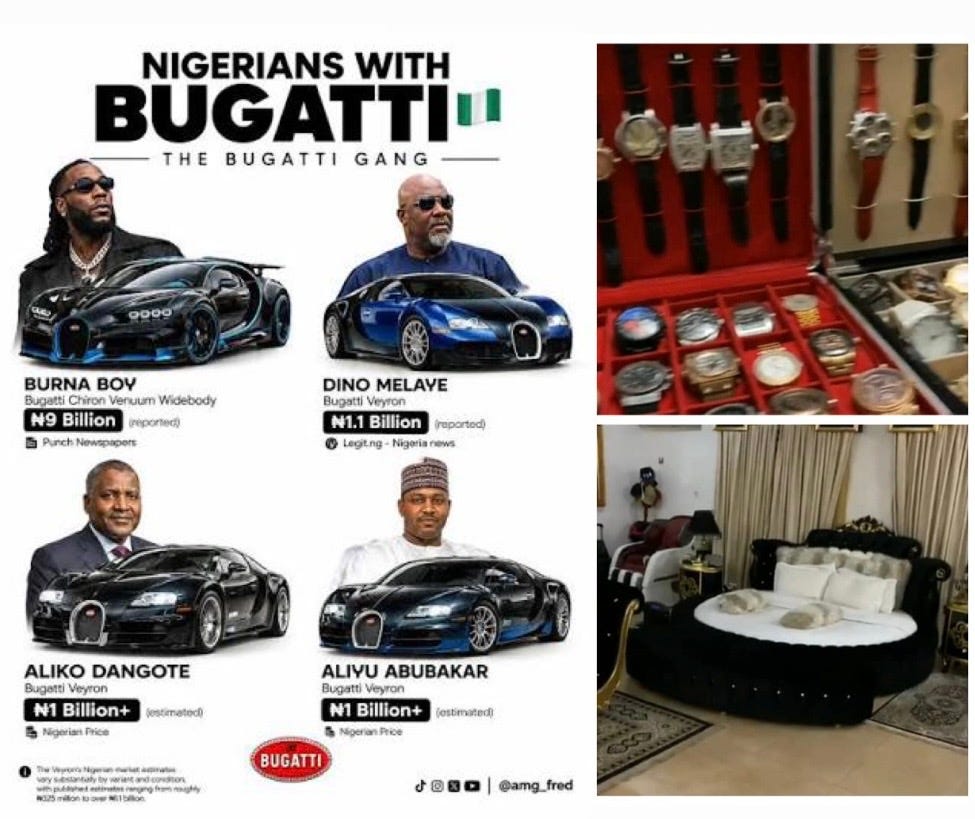
And we are a rentier elite.
Our economic and political attitudes leave our country to depend on foreign investors and foreign loans, instead of home grown economies that we could have funded and managed in our self interest.
Because we don’t care to interrupt this multi generational state of abandonment, our oil revenue has become a curse, country is in debt traps, and our non-oil sectors are neglected.
This economic outcome all starts with the mindset of the average Nigerian that help will come from somewhere: from God, from America, from the west, from China, from anybody except ourselves.
We are the only group of people on earth who have this thought. In every other continent, they ride or die with every decision the political class makes on their behalf - the English word is accountability.
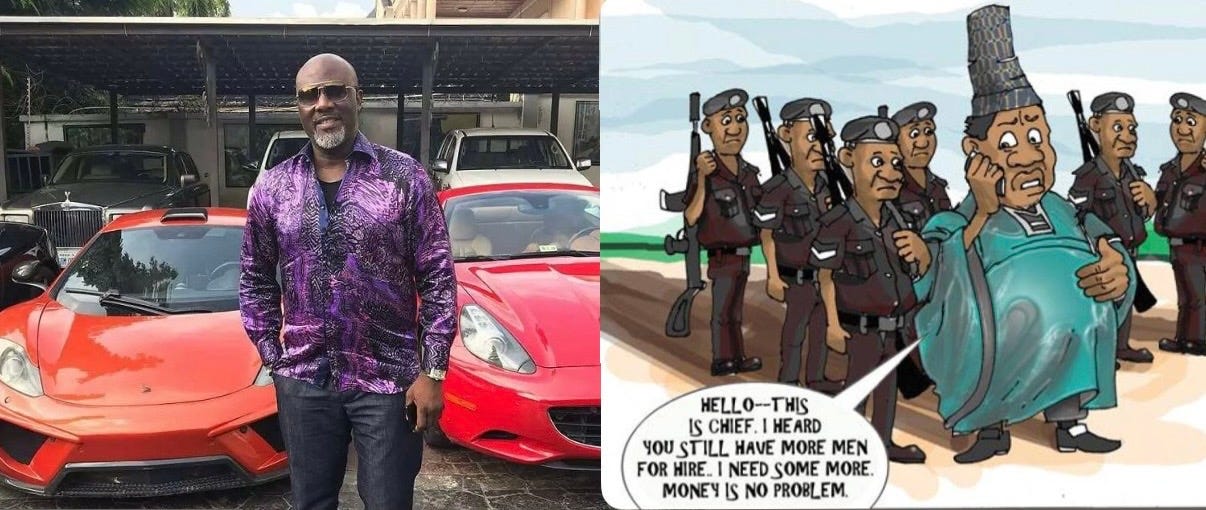
In other countries no one can become respected or powerful, even a tyrant, because they drive a big car or have a big house. But we in Nigeria give our power away mentally to everyone that is richer or more powerful than us.
We have no ability to question oppressive, unequal wealth. We worship it and aspire to be the next wealthy oppressor,who will benefit from the widely unequal society.
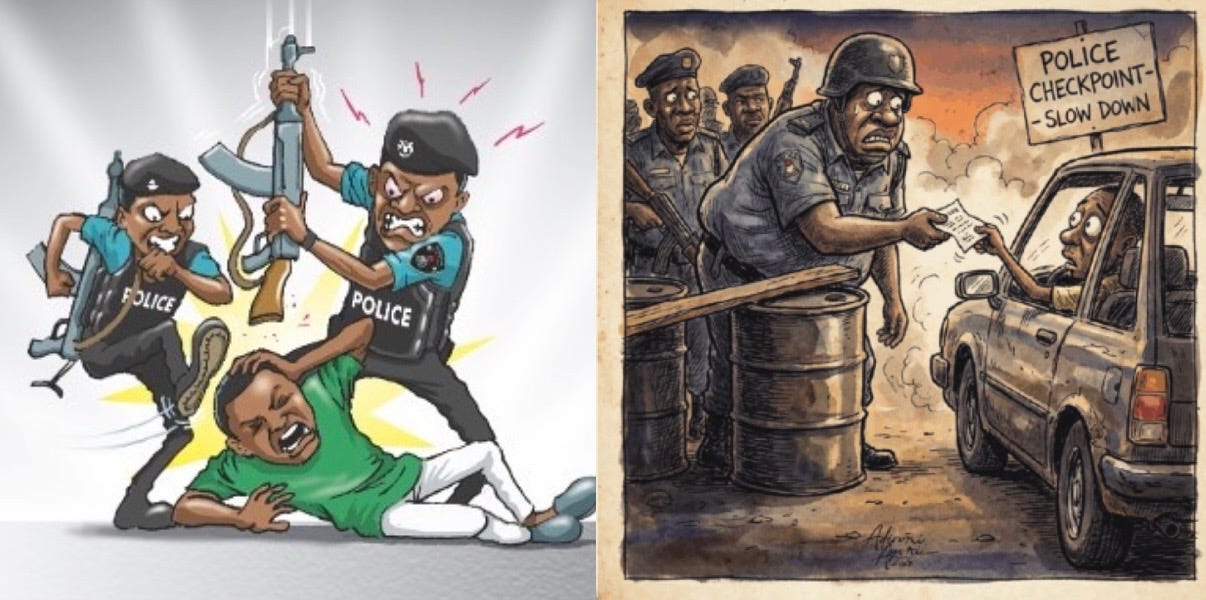
Everybody oppresses everybody: from police, to our parents, to pastors or imams, to lecturers, to lastma, to area boys… all this is a culture of giving away our power, and giving respect and obedience unquestionably, and projecting authority outside of our own selves.
I’m saying that this sense of not knowing where power comes from, of thinking of power as outside ourselves, of waiting for someone, maybe God, maybe a politician, maybe a foreigner, to make our lives better, I’m saying that this cultural attitude allows us to continue to accept foreign loans, nearly 70 years after foreigners stopped ruling us on our own soil.
And that, the expectation that help will somehow come, keeps us from cutting waste, and saving oil revenue into a sovereign wealth fund.
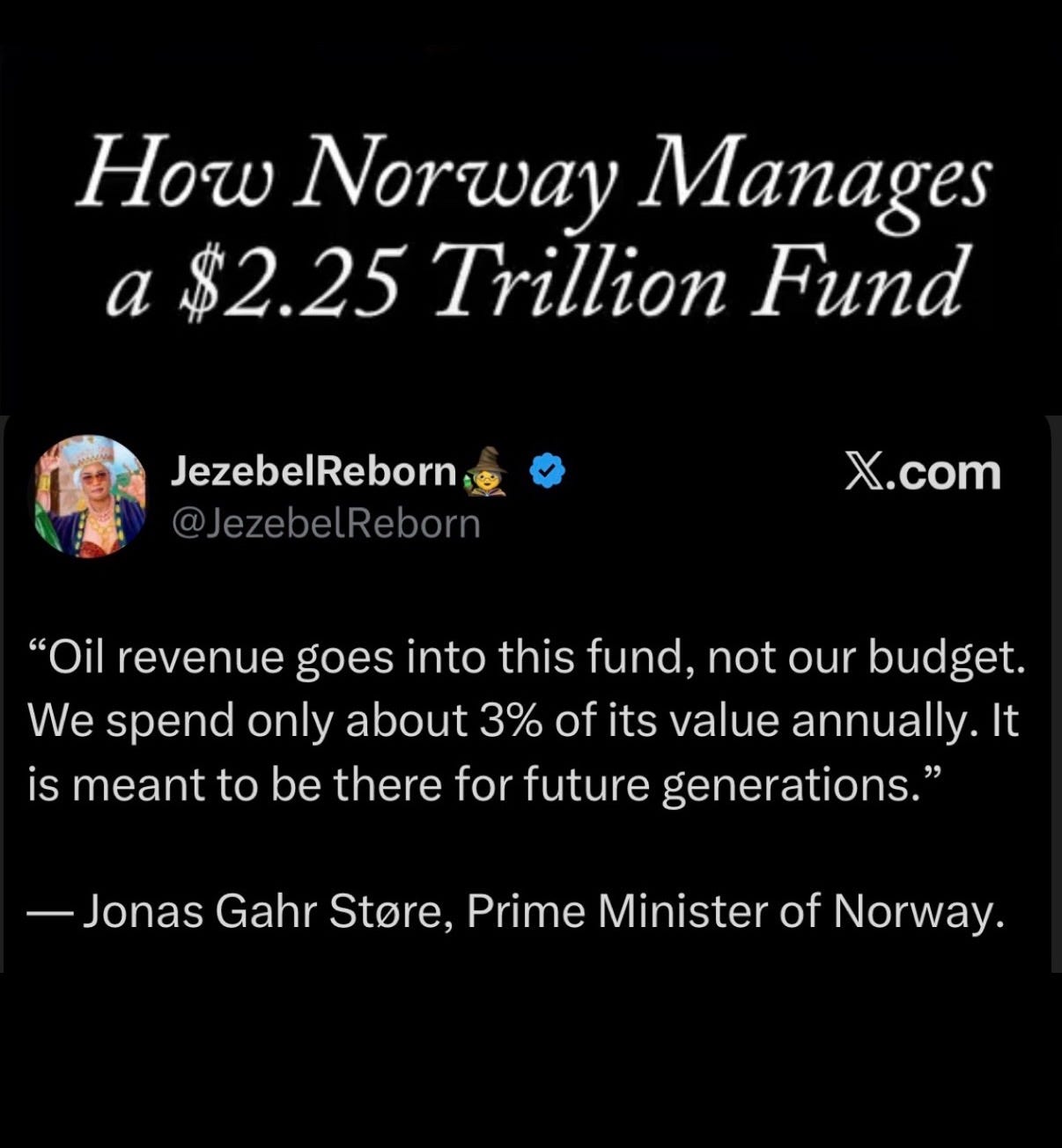
Our underlying way of thinking as a culture, and the kind of rent seeking elite that comes from it, is what holds Nigeria down. Our economy remains undeveloped. Our politics remains corrupt.
Rentier elite keep reproducing the same type of politicians, generation after generation, vote after vote, election after election, or even revolution after revolution.
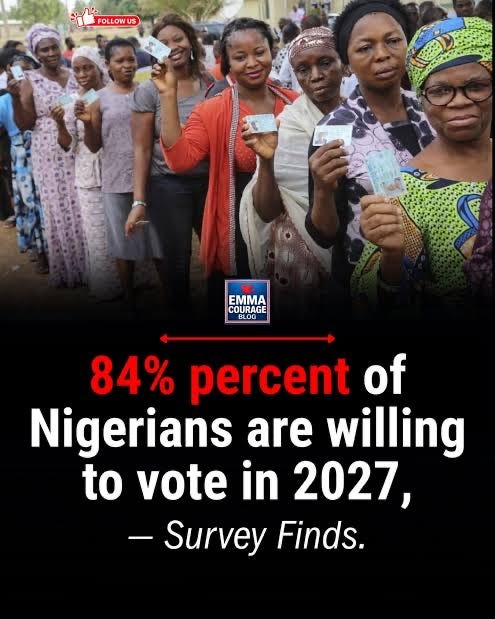
But once in a lifetime, a tiny ray of opportunity shows up. 2027 is asking Nigerian elite if once again we will give our power away.
Or if we will take it and supervise how politicians use it.
It’s an egg or chicken problem. Shall “the right politician” develop our country? Or shall our country “develop” to the point where we have right politicians?
🤔
But: There is no particular politician that can save us. No one can save us. None but ourselves, as Bob Marley said.
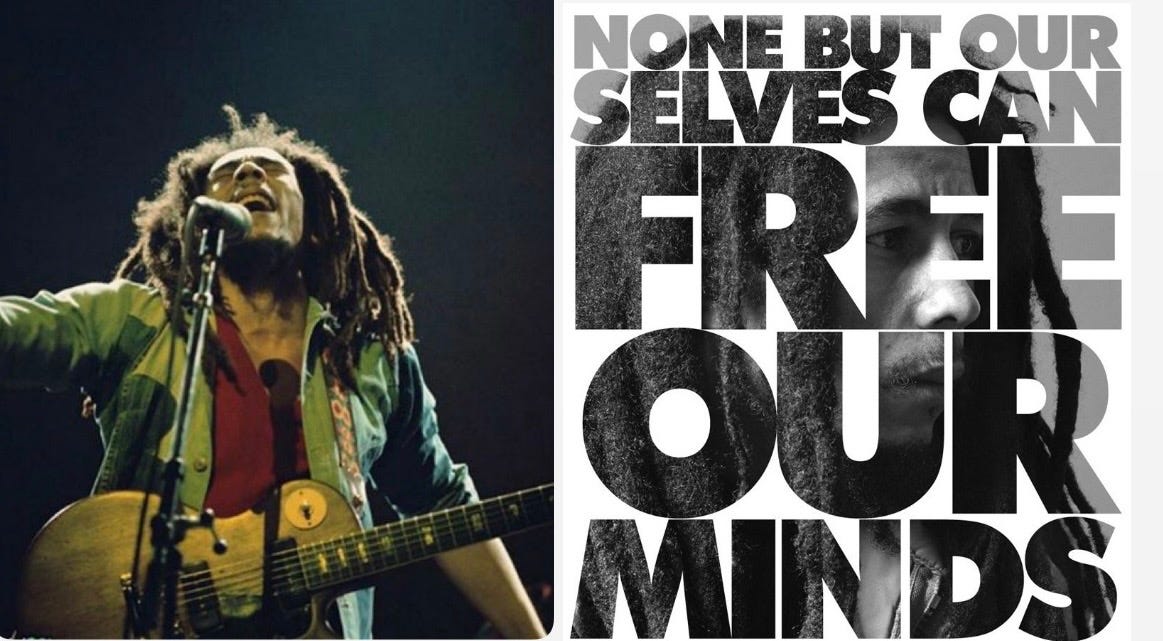
So, there is no right politician. But there are very wrong ones. Still, there may be one, once in a while, that we can work with to build a culture of accountability, to cut waste, to exercise fiscal discipline, and to absolutely stop depending on foreign financial “help”.
Feeding bottle mentality for grown adults is a developmental anomaly. In 2027, we have agreed to allow elections determine our political class. These are the economic managers we will work with. After 2027, the options slim down, to intervene in the quality of our lives. Some of us will be dead before another cycle is offered.
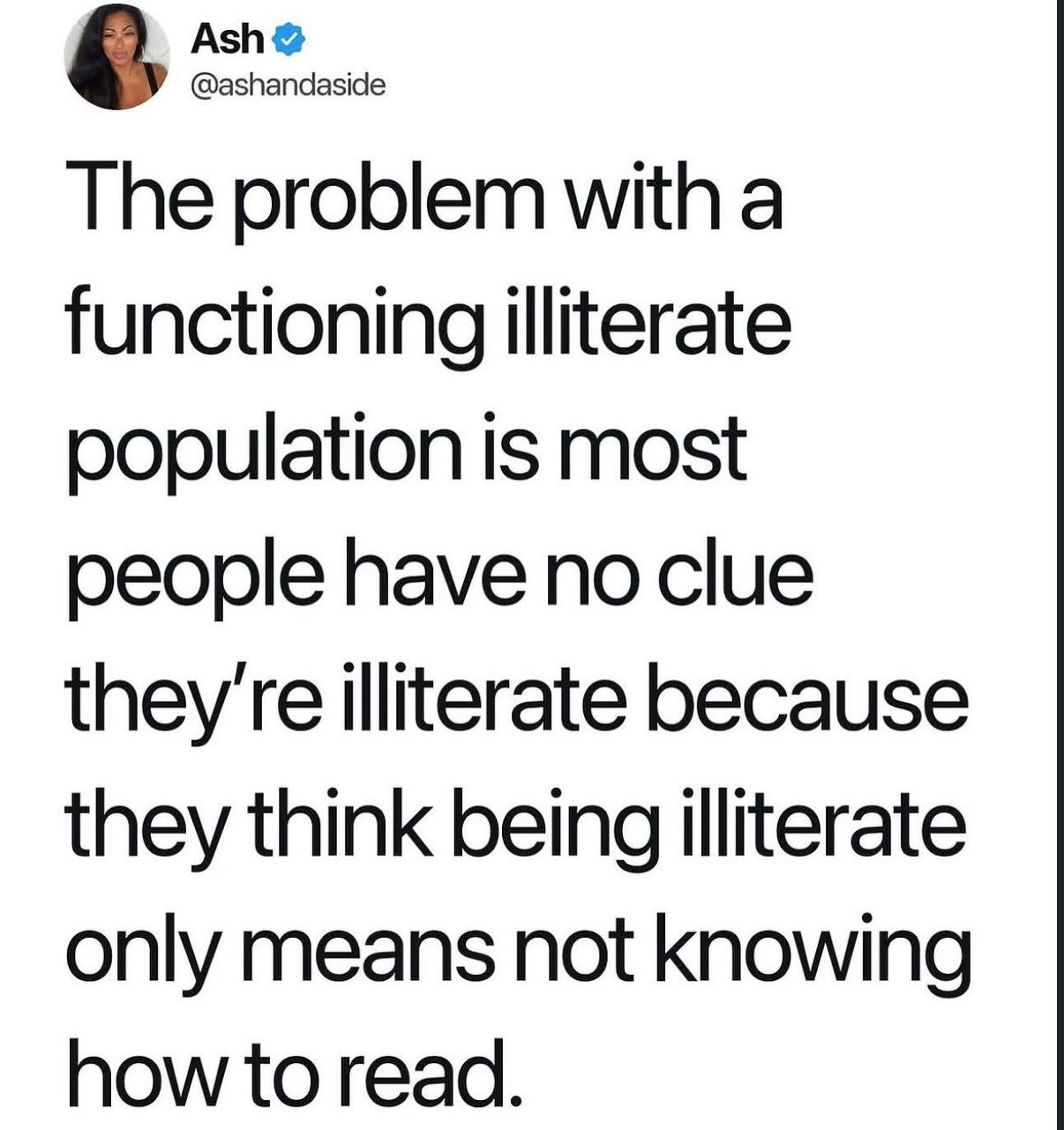
Also at some point, we the elite have to educate ourselves to accept that we don’t have a particularly unique problem. Our economy and politics are not a “Nigerian” problem. They are global. The same systems are holding millions of people down, in Kenya, in South Africa, in America, in Brazil, in Europe.
The one difference is that Africans have a mindset that help will sonehow come, someday. While in other parts of the world, citizens set minimum standards for elected political office holders, and keep reworking the equation every four years. It is only Nigerians that allow one plus one to be equal to half, while hoping and praying for the math to one day somehow balance itself. Besides our complicity in bad governance, there is nothing unique about Nigeria. Other countries are also struggling. But they struggle with minimum standards for what they will allow.
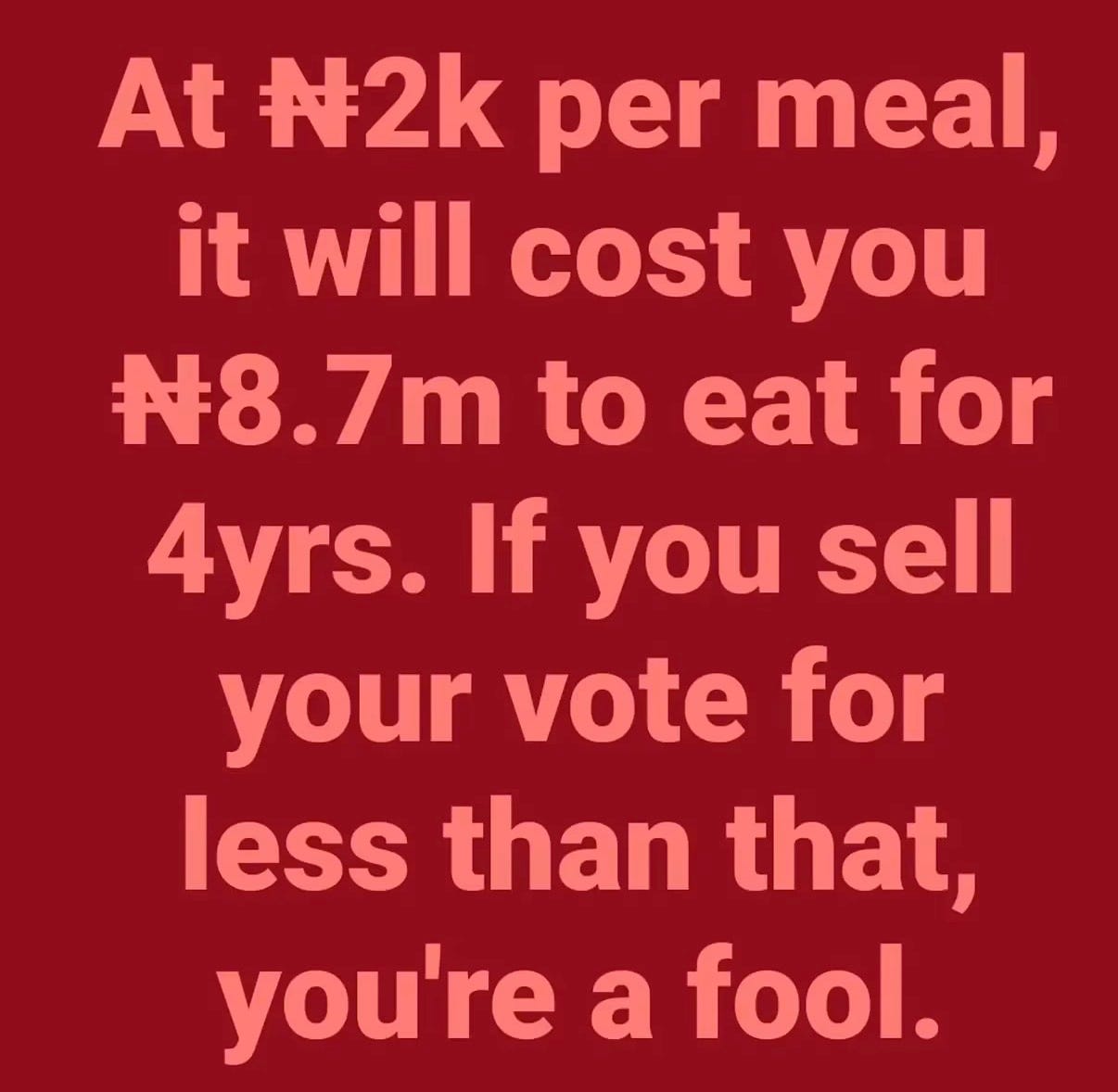
We need to set minimum standards through our decisions and indecisions, as a collective group of people, whether Igbo, Yoruba, Hausa, Tiv, itsekiri, Edo, Muslim, Christian, traditional believers, or whoever.
The economy doesn’t care about your demographic description. We are all roundly copulated with in a very rough way. I was supposed to use an F word but there are children reading this, and for their sake, we should make 2027 the last year we support politicians who have no intention to save oil revenues into a sovereign wealth fund, or to govern based on non oil revenue, and who are still comfortable with living in debt traps and depending on foreign loans for a living, while unaccounted millions keep dying from Lack of access to health care, good education, insecurity and starvation.
And El Niño, but who is even counting that?
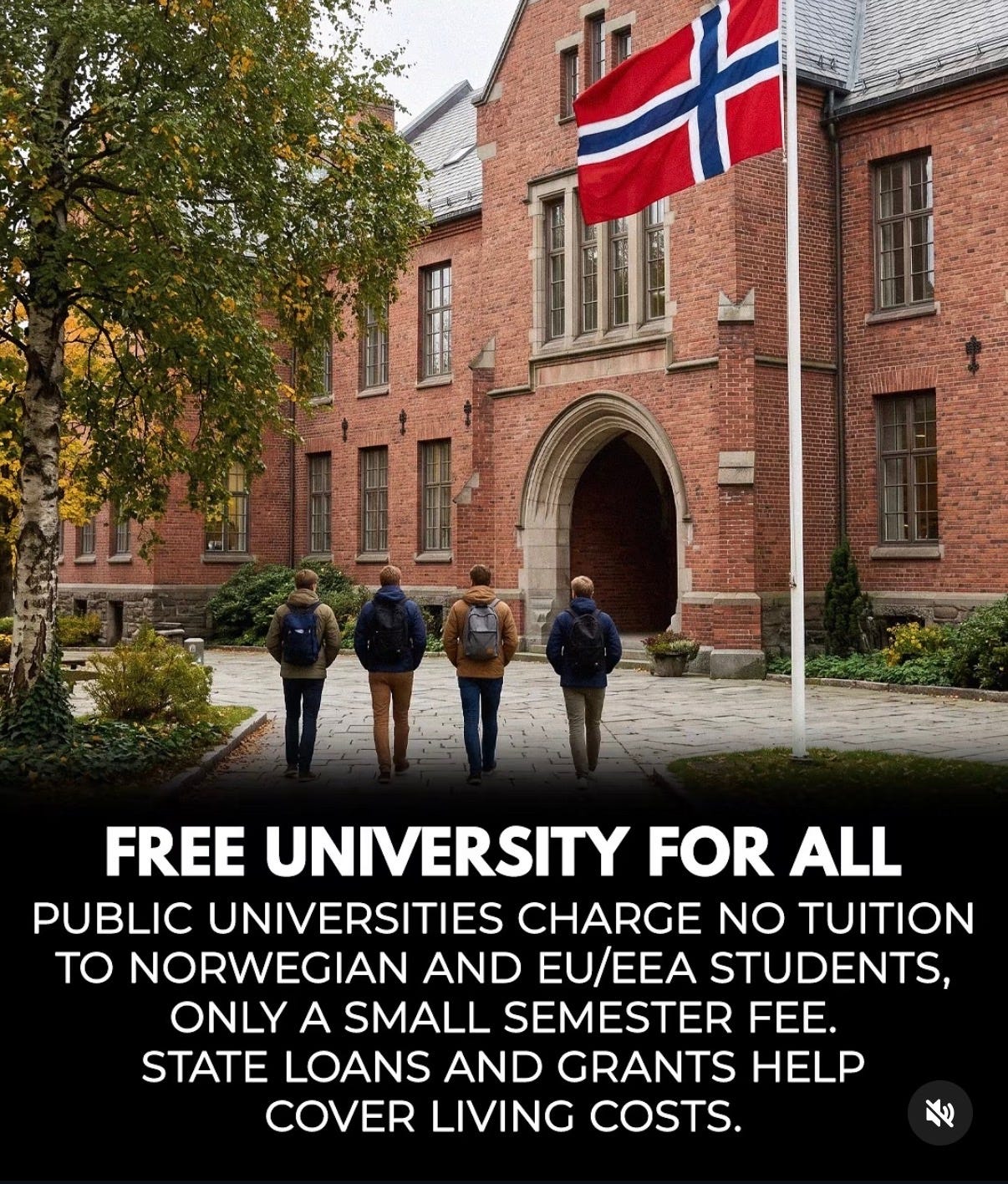
It will all get worse, not better, unless we outthink the way we’ve been for generations, and unplug ourselves from misery and unaccountable governance for the first time, throw away our western feeding bottles, and keep the remote control of the economy in our own hands, permanently.
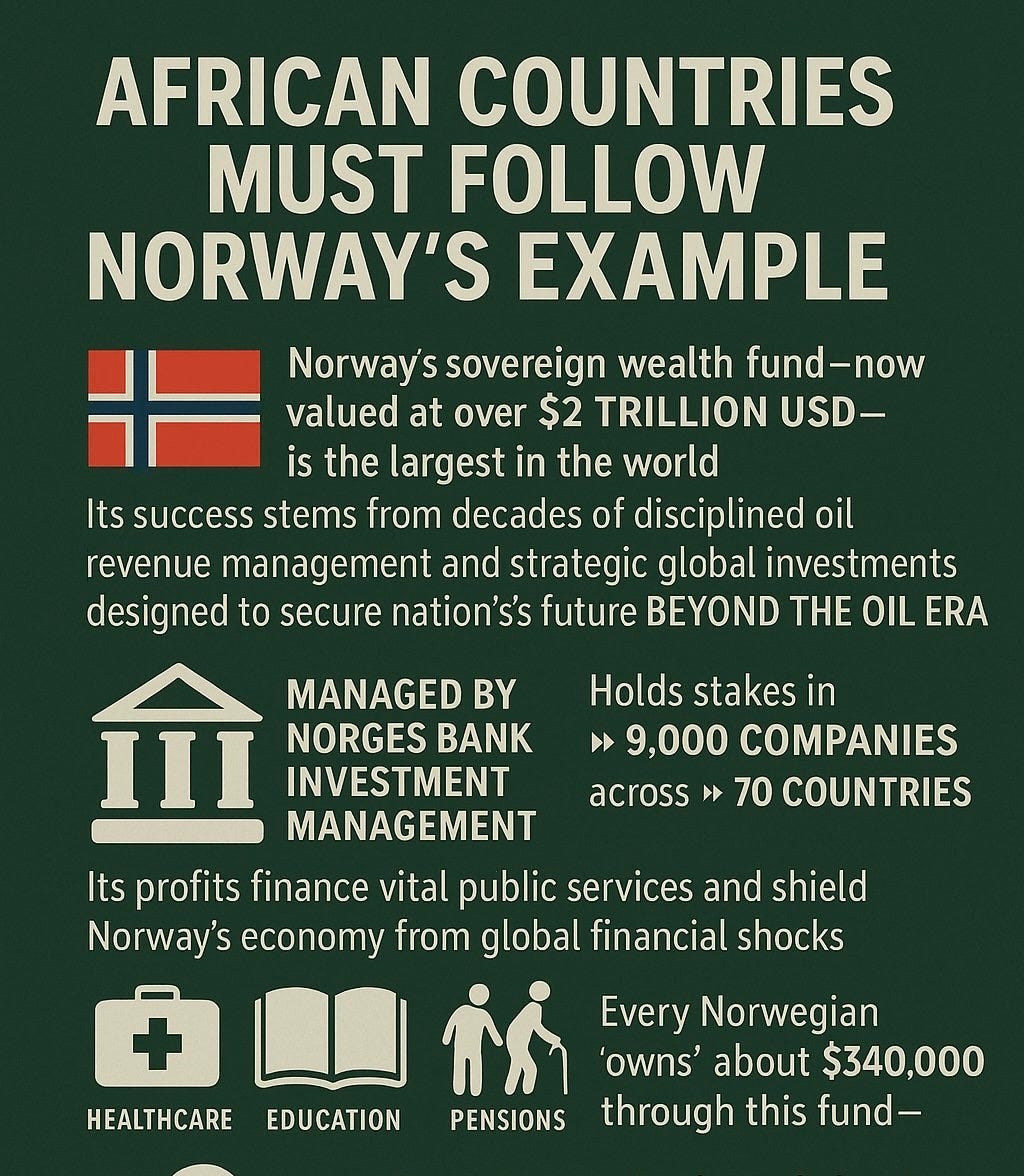
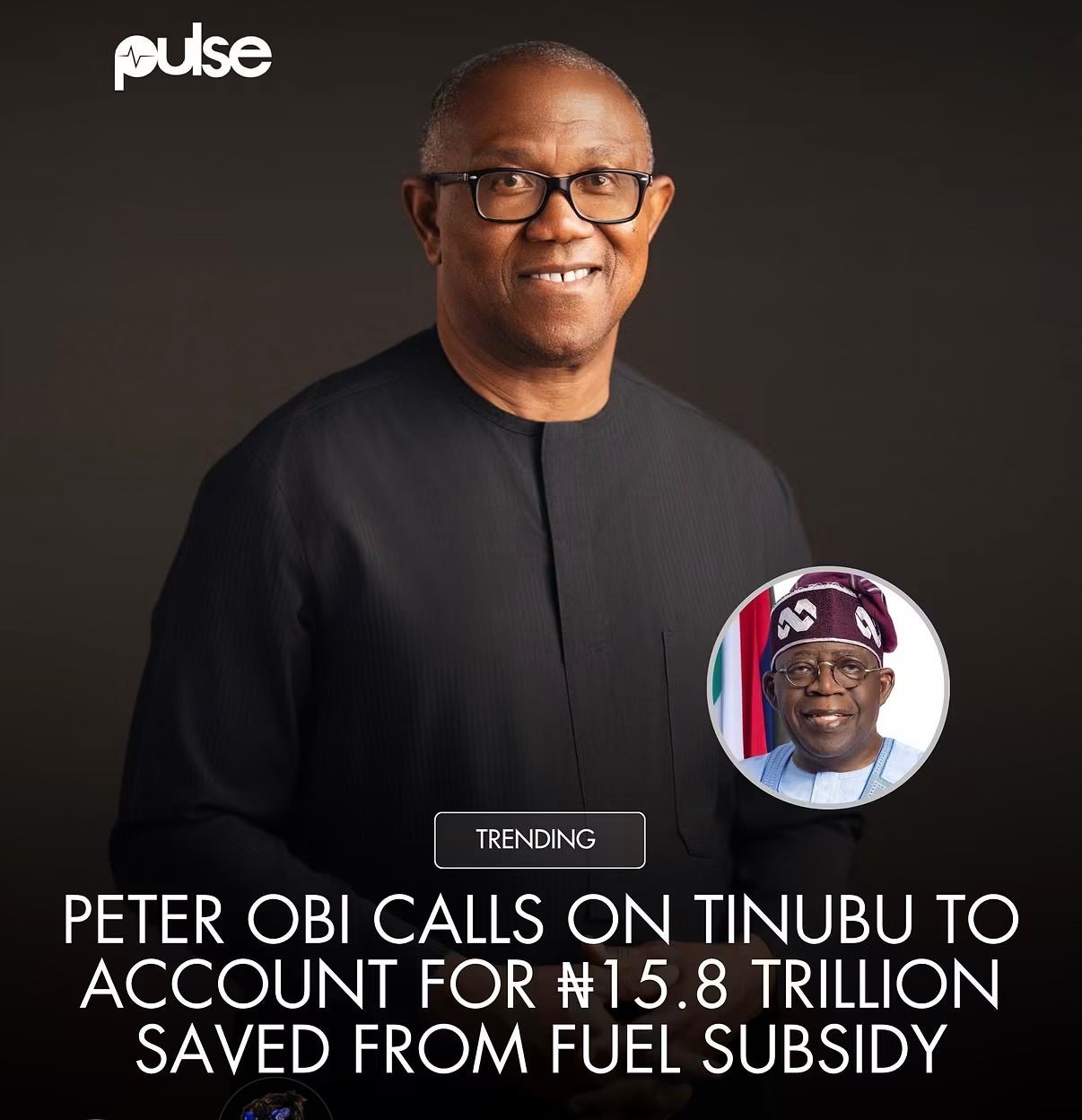
2027 starts with accountability.
Norway would never reward a political class that wasted their oil money. Why are so many Nigerian elite unable to outthink our multigenerational political culture of waste, waste, waste?
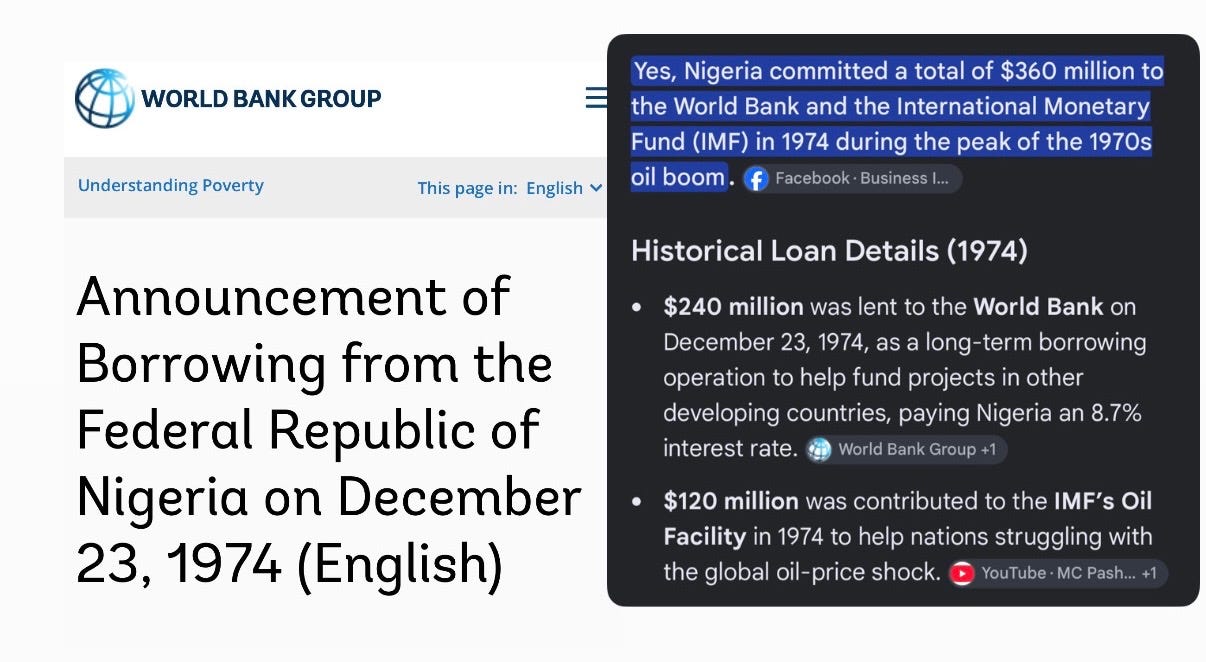
Nigeria does not need ONE PENNY of world bank or imf loans. In the old days, Nigeria LENT TO the World Bank and IMF. The 300 million dollars we gave away (I’m sure we didn’t get it back) is equivalent to over 2 trillion dollars today.
2 trillion is also exactly how much Norway has saved in their Sovereign Wealth Fund, in just 20 years.
Get it now? The difference between Norway and Nigeria?
Tell me if you get it, or you think we should continue the way we are now, in the comments…
To your point about (mis)education . . . . think about this:
Those who control the means of production have an interest in shaping the means of understanding production. Exploitation becomes more secure when the exploited mistake the interests of their rulers for their own.
If your power or wealth depends on exploiting others, why would you want them to understand the machinery of their own exploitation? Their ignorance is not a problem to be solved. It is an advantage to be preserved.
A ruling class has an interest not only in controlling society’s wealth, but also in shaping how people understand the world.
The most effective form of domination is not merely to keep people powerless, but to persuade them that the system which keeps them powerless is natural, fair and inevitable.
That is why education, information and ideology are never entirely separate from class power.
Exploitation reproduces itself not only through control of material wealth, but also through control of the ideas that justify its existence.
This is why you can study economics, history and political science to postgraduate level and still be blind to class analysis.
Great to read from you again Ayo. I think there’s a word for what you are describing - CAPITALISM. We’ve been doing elections now for a couple of decades, and yet, the kontry is still doing jaga jaga.
We live in a class society, and it’s impossible to understand our world or even begin to contemplate solutions to the problems you describe without class analysis. The state is an organ by which one class suppresses the other. When capital has firmly entrenched itself and taken hold over the state, no change in president/head of state or political party will dislodge it.
I don’t believe another election - no matter who or which party is (s)elected is going to materially change things for the hundreds of millions of Nigerians.
Lenin spoke about this in his booked entitled “The State and Revolution”. He wrote:
In a democratic republic, Engels continues, “wealth exercises its power indirectly, but
all the more surely", first, by means of the “direct corruption of officials” (America);
secondly, by means of an “alliance of the government and the Stock Exchange"
(France and America).
He continues:
Another reason why the omnipotence of “wealth” is more certain in a democratic
republic is that it does not depend on defects in the political machinery or on the
faulty political shell of capitalism. A democratic republic is the best possible political
shell for capitalism, and, therefore, once capital has gained possession of this very
best shell (through the Palchinskys, Chernovs, Tseretelis and Co.), it establishes its
power so securely, so firmly, that no change of persons, institutions or parties in the
bourgeois-democratic republic can shake it.