Within a decade, maybe slightly more, wasteful mismanagement of public finances will go out of fashion.
This will not be because we become more moral. It’s not a moral issue at all.
It will be that economic and market systems evolve, in such innovative ways, that it is simply no longer profitable to waste public finances.

There will be such a competitive, life-or-death kind of new business ecosystem that will leave absolutely no room for any kind of waste.
It will not be an ethical revolution at all: it will simply be the only way.
Some of this may have to do with technology: as #artificialintelligence transitions to a fully independent role in governance and economic control, there will simply be no room for numbers that do not add up.
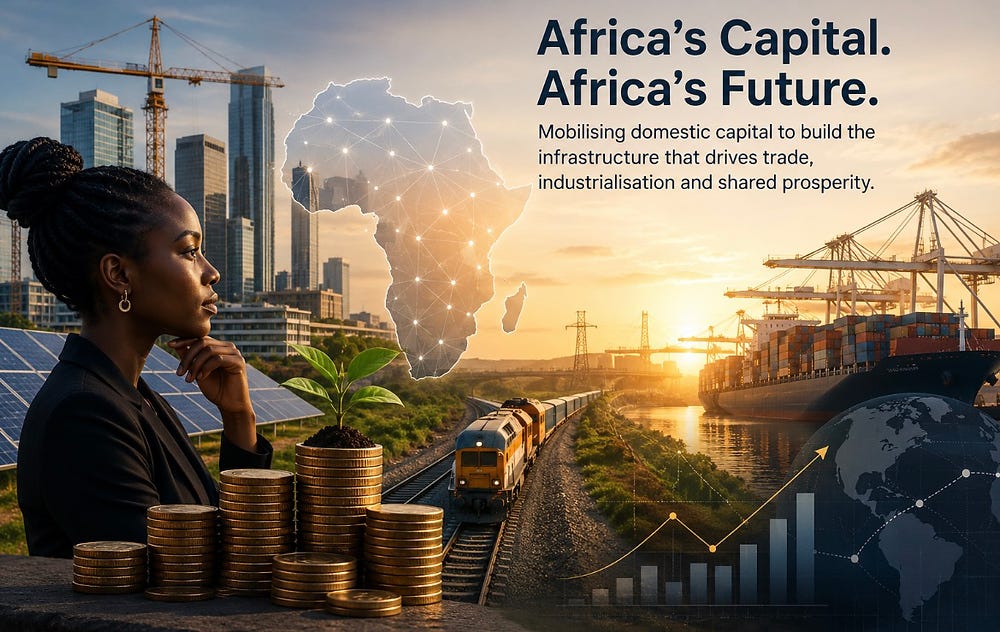
The other factor will be that the present practice of “foreign aid” and dependency based financing will disappear.
Again, not because we become more intelligent or suddenly radical.
It will be that there’s simply no more money, candidly, to give away. Countries who now position themselves as “western saviors” will be busy saving their own people.
This transition is already ongoing, with the brutal amputation of USAID, and several donor countries reducing aid.
We will go from drip-drip-drop to a stunning silence, and the hand me down tap will dry up forever.
This will happen in a decade, maybe more.
In places like Africa for example, where much capital lies redundant, crowded out by the donor-industrial-complex … will we finally put our feet down, develop our own infrastructure, and seed our own ventures?
Will MSMEs lead? Or will we still be beholden to global corporations?
Will AfCFTA innovate an African-led Industrial Revolution? Or will the world’s biggest trade zone be relegated to imports and consumption?
We are sitting on unused resources, and entertaining too many fiscal loopholes for waste and corrupt misuse of public finances: and the consequences are internecine conflicts, decrepit infrastructure, crises in education, and #healthsystems that are not yet ready for the next wave of pandemic panic.
We will likely miss the Sustainable Development Goals (SDGs) by 2030.
In their place, Dr Olusoji Adeyi has recently suggested Regional Development Goals.
We need at least an extra decade.
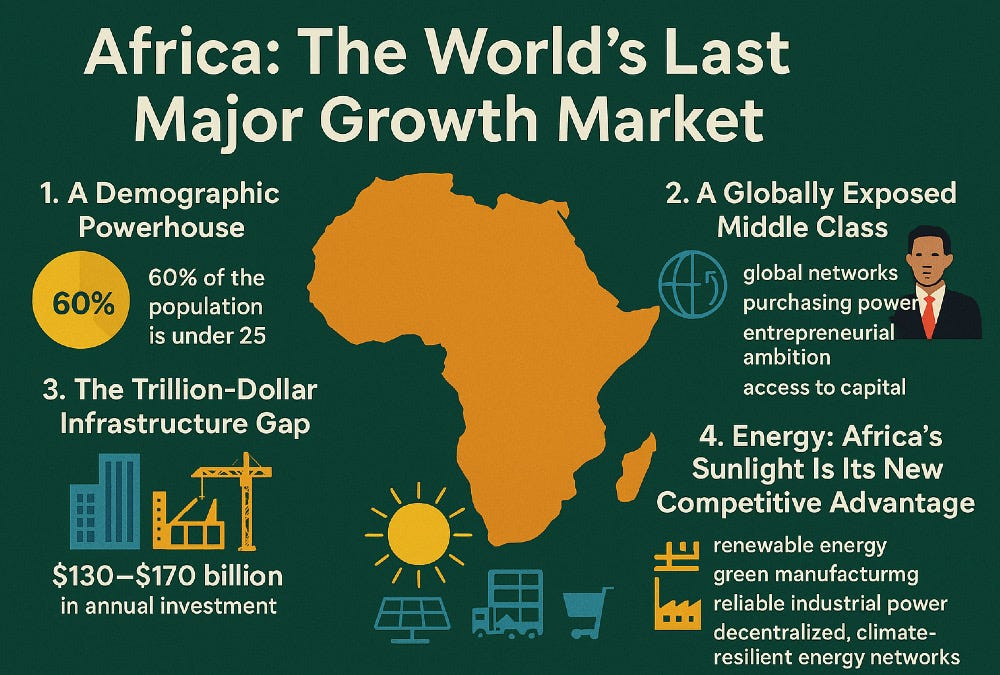
Health, education, water, and clean energy already demand over £158 billion in annual capital.
Massive infrastructure deficits require up to £134 billion annually. Infrastructure is a critical non-health determinant of health systems.
Meanwhile, African pension funds hold assets worth an estimated £369 billion and are projected to grow to over £5 trillion by 2050.
Sovereign wealth funds are currently estimated at between £95 and £104 billion.
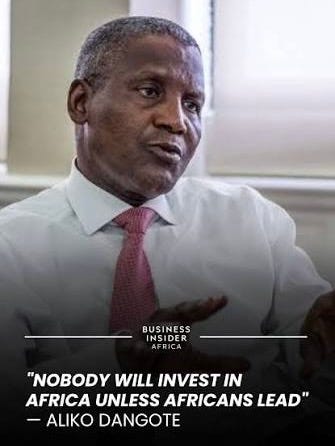
Remittances to Africa reached £71 billion by 2022, and exceed both foreign direct investment (FDI) and official development assistance (ODA).
Will Africa continue, cap in hand to global capital, or will we crack the code ?
I first published this article in March 2026.
It prefaces another one just published this week, that explains the ‘how’ of African capital.
You can read that here: Politics Is Dead