In its one hundred and thirty one year history, the Nobel has almost never been awarded to anyone who isn’t white.
Does this even matter?

If you think about it, it might be a classic chicken and egg problem. First of all, there’s a possibility that I’m raising a non question. Why in the first place, should the Nobel prize be awarded to anyone who isn’t white? After all, the prizes are set up in Sweden, and Norway.
I mean, if I set up a prize in Ibadan, Nigeria where I was born, wouldn’t it be ridiculous if any white person questioned why no white person has ever gotten, say, the Látóòsà Prize?
But here’s the thing. Nigeria’s systems of knowledge have never controlled the thinking of the rest of the world. The sciences and arts for which the Nobel is awarded have been taught and practiced on all 5 continents.
As a result of centuries of colonial onslaught, hundreds of millions of people of every race have advanced education in Economics, Physics, Chemistry, Medicine, Physiology. Every time the Nobel is awarded, many of these people listen.
These millions all understand these prizes to be the peak of recognition in the lifelong academic disciplines in which many of us make a living.
On the other hand, it is also entirely possible that no one in Norway is seriously thinking that anyone outside the demographic that produced the prize itself, is a realistic contender.
🤔
Which is why questions such as I now ask, are chicken and egg: is it that the award is discriminatory, or is it that the assumption it should be global is itself unfounded?
Who’s right? Who’s wrong?
I am fairly certain that questions like mine are significantly unlikely to emerge from within the core of the global knowledge system.
So, there is core. There is periphery. And these are not strictly geographic categories.
So, let’s talk about hierarchy.
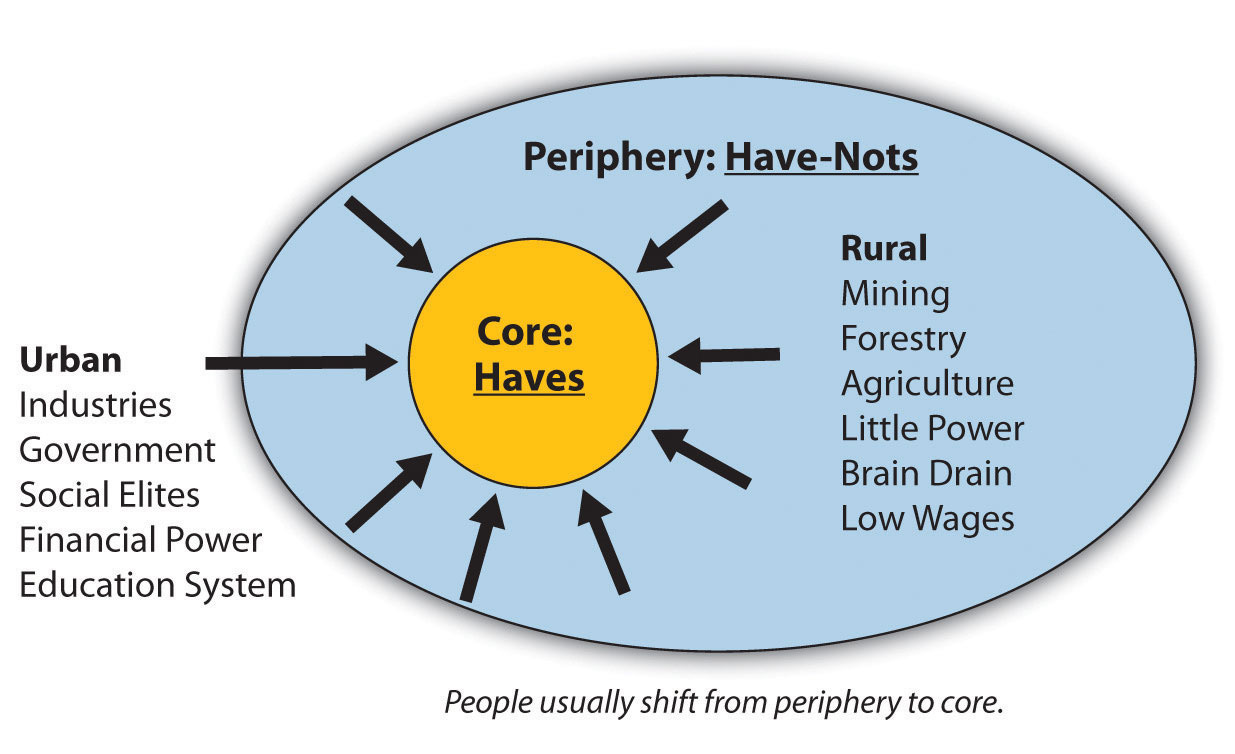
The world as one big stinking onion of knowledge and power, was first described in the late 1940s and 1950s by Argentine economist Raúl Prebisch.
And, in 1974, Immanuel Wallerstein formalized World-Systems Theory, which categorizes global capitalism’s division of labor into the core, the periphery, and the semi-periphery.
Europe & America emerged the core, through centuries of unequal exchange, by which global wealth was steadily gathered to the concentric center of the system.
Countries outside the core were reduced in power but not in value, as they became primary-resource exporting colonies, aka, perpetually developing nations but never developed countries. Aka, the periphery.

You see?
Of course it’s not a geographical attribute, except in the mind of the thinker that centers themselves and others others.
It’s a hierarchical attribute. And, like most other seemingly indelible artefacts of modern human society, a mere construct, that can equally be dismantled by thought, followed by appropriate action.
So, is core and periphery why some award and receive the Nobel prize, while others look on and clap?
Is the Nobel committee mindful that there are people right now in India, China, Nigeria, Kenya, Brazil, Equador and more, who know Nobel Prizes were awarded this week?
That must bring us to the other question- even if, by any chance, people far flung from the supposed core of human thought production are aware, are they also equally deserving?

I know for a fact that there are several people in the west who find the suggestion itself ludicrous, and at best transiently intriguing in the same way as finding a stray kitten sitting outside your window.
From the inside out, knowledge that is learnt or practiced outside the colonial core can hardly be so original as to deserve consideration for the highest prize.
Or is it?
I was born in a university. The first of few to be built outside the European core, as the sun set on colonization, in a new modern world boldly emerging from the smoke and thunder of World War II.
Ghana. Sudan. Algeria. Angola. Indonesia. Nepal. South Korea. Myanmar. Sri Lanka, had all set up their first modern universities by 1962.
In the first wave of this academic revolution was Nigeria’s University of Ibadan, since 1948. I was educated there, as were my parents before me. A sprawling campus located across west Africa’s largest city is a self contained metropolis, and in history, second only to Sierra Leone’s Fourah Bay College, that being the oldest Western-style university in Sub-Saharan Africa, since 1827.

Whatever bragging entitlements I earned through a lifetime of scholarship at Ibadan was quickly dissipated after I began to be a European resident.
First of all, I faced the same interrogations repeatedly until I began to retreat from providing answers. In one instance, after a nurse in one Netherlands hospital had exercised the usual curiosity, and gotten the usual answers, she followed up with, “and what do they teach In Nigerian medical schools?”
Gulp.😳
To that, I had no answer. I had never expected the first question to be pregnant with another baby, so to speak.
But what I saw outside the walls of the hospitals, in the streets of Europe, further exhausted my ready repertoire. There were no other people who looked like me, who did what I did. Such a contrast to where I was raised.
In fact, there was such a stereotype of what black Africans in Europe did, or their backgrounds, that I’d more than once been asked by a lawyer to provide research answers about what risk boat migrants face, if their asylum applications were to be rejected: to which I replied, that, I had no experience of the subject.
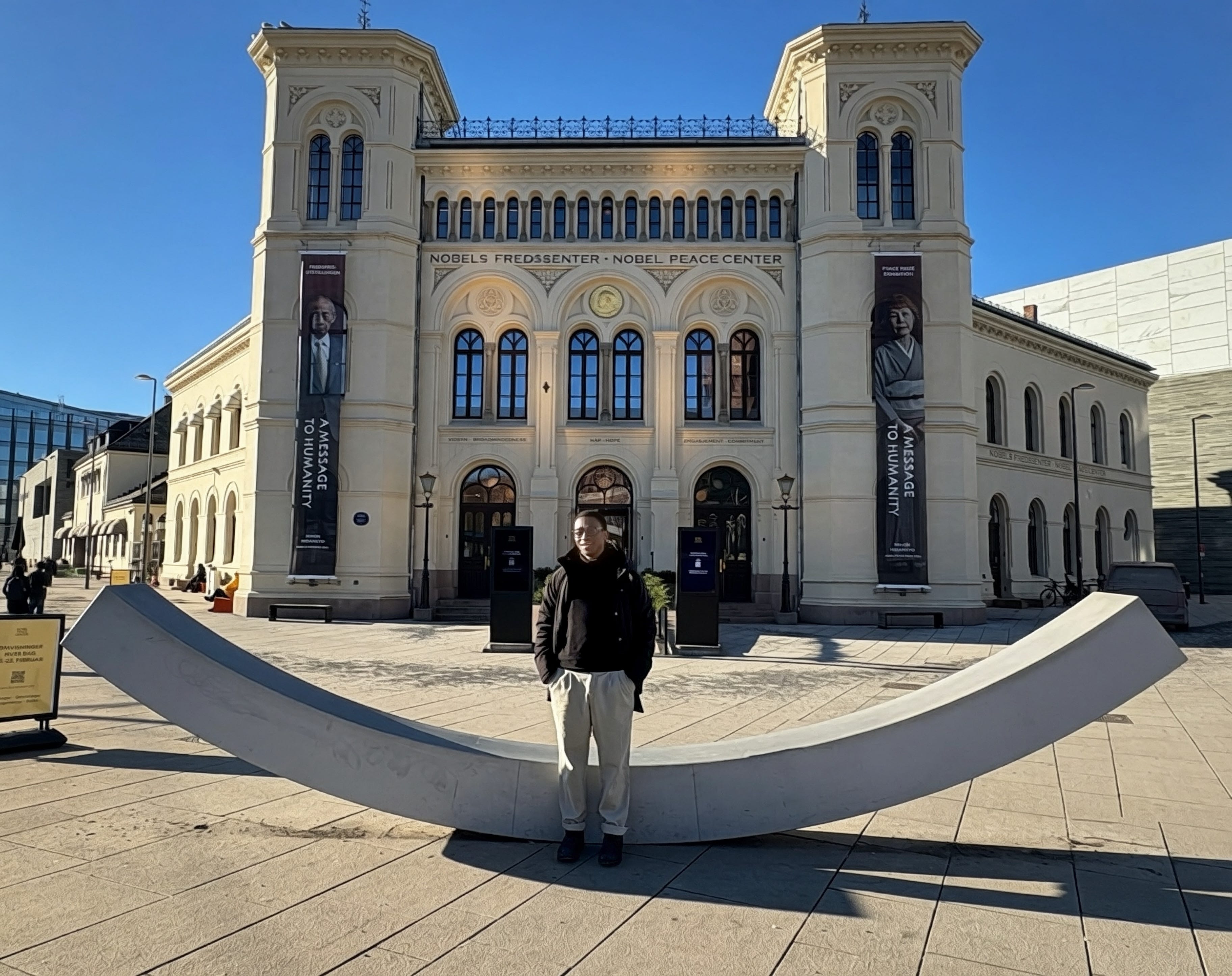
It is in this world, that the Nobel prize is framed. Fortuitously, I have since moved from the Netherlands, in pursuit of whiter snow, and now live where these prizes are awarded.
I have walked the corridors of the Nobel Center there, even on days when I was the only one who looked like me in there. Wangari Maathai, Kofi Annan & Nelson Mandela’s portraits adorn the walls, alongside many others, but their Nobel prizes are not for any academic thought.
On the other hand, when Professor Wole Soyinka won the Literature Prize in 1986, he became the first black African to receive a Nobel prize for producing thought. In the 131 year history of the Nobel, Soyinka’s win is only the second ever, by a black person. The first black person was the American, W. Arthur Lewis, and he remains the only Black laureate to receive the Nobel Prize in Economic Sciences.
To date, a Black scientist has never been awarded a Nobel Prize in the fields of Physiology/Medicine, Physics, or Chemistry
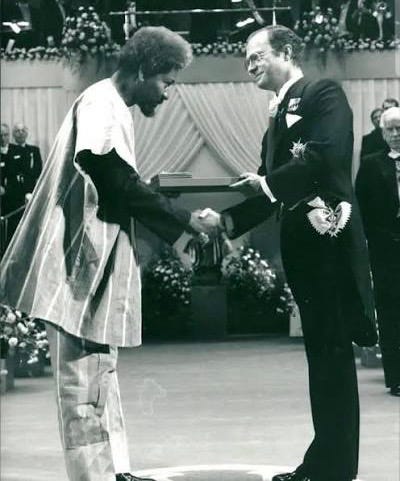
Soyinka was a familiar name in my household, being a professional colleague in my parents’ alma mater. In my childhood, he represented the natural idea for me, and my peers, that global excellence and recognition was in no way unusual.
You can frame my recoil at Europe’s constant questioning, in that context. But I was only questioned, not killed. Only 2 months ago, Cambridge professor Jason Arday committed suicide after 249 news articles were published in 22 days scrutinizing the validity of his academic credentials. Arday was in a high risk group for suicide, as a known autistic person, but even after he lost his life, 188 articles were still published in just 9 days, as 15 national newspapers poured concrete on his grave over his accomplishments as the youngest Black professor in the history of the University of Cambridge.
These same academic institutions have to advise the Nobel committee on what authentic knowledge production looks like. For a coterie of reasons, there’s typically no one who looks like Arday, or myself, in the places that judge these contests. And, while they are framed as merit, it is sort of like an Overton Window, where you think you are free to think, but your freedom ends at the window of cultural expectation & social norms.
More questions than answers.
It is plausible that nothing practiced at the universities of Ghana, Kenya or Nigeria by an African academic is worthy of Nobel distinction. Even the global university ranking metrics consistently rate these institutions far, far outside the core of knowledge production.
In the egg or chicken question game, maybe no original scientific or economic research has ever been produced by my father’s generation, or the professors before them. Then, if that is the answer, we who celebrate nearly a 100 years of our various alma maters need to question what it is we have spent the last almost-century studying, and decide what we need to start doing.
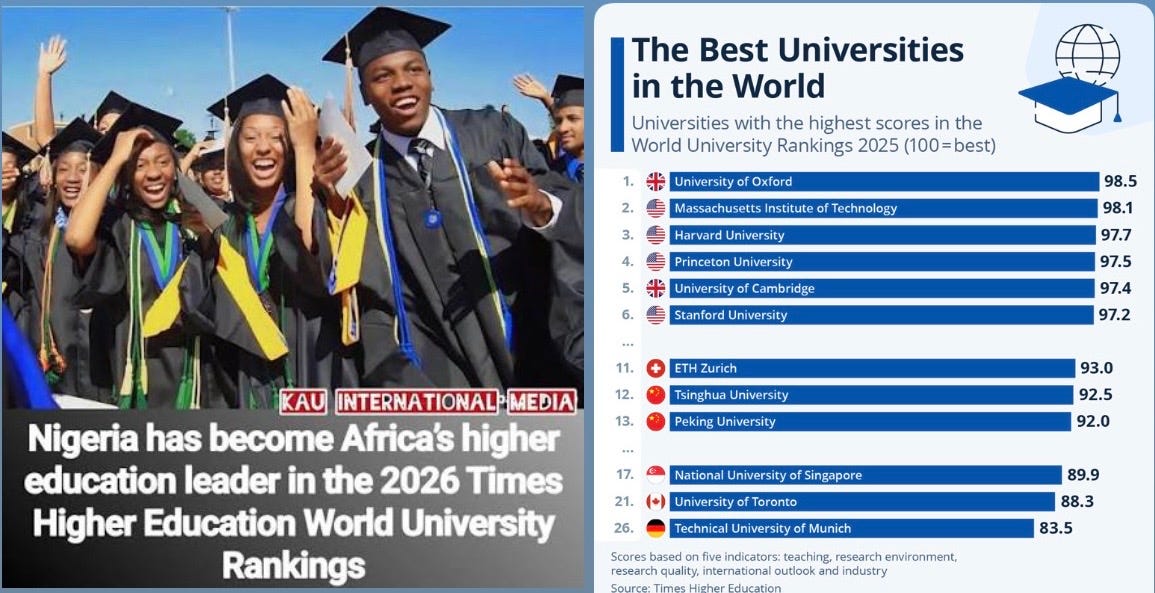
On the other hand, neither my colleagues nor I, not to mention my father’s generation of academics from Nigeria, have ever been accused by our peers with whom we have worked globally, of not knowing what we are doing. In fact, we are often better.
So is it only a question of who can have knowledge, or is it also a question of who has the power to decide what knowledge looks like? Or is it both questions?
And, If the Nobel institute expanded its scope of thinking to also include black Africans in African institutions, would any of us even win?
And, say, in a hypothetical scenario where we did win, what would be the implications for the global system of thought production? Or for how hierarchies of who can know, are perceived?
Deeper questions: are there structural constructs in the global system that will continue to determine for a very long time, who produces globally worthy knowledge, and who merely consumes it?
In that sense, is it possible that no individual effort will ever deconstruct a hierarchy that is preset to filter in or out who can be considered in any competition for best original thought?

What is it exactly that we need to deconstruct in the basic assumptions by which education functions?
What textbooks are we reading? Who writes them? Whose theories are taught in these textbooks? Whose theories are useful in the global marketplace? Who standardizes and assesses what is taught and practiced?
Where are the materials and equipment for learning and research manufactured? Manufacture is a very important word. It is the opposite of frank consumption.
And, how much does manufacture cost? Who can pay for manufacture? Is the market for distributing research materials and equipment structured openly, or in a closed way that limits competition?
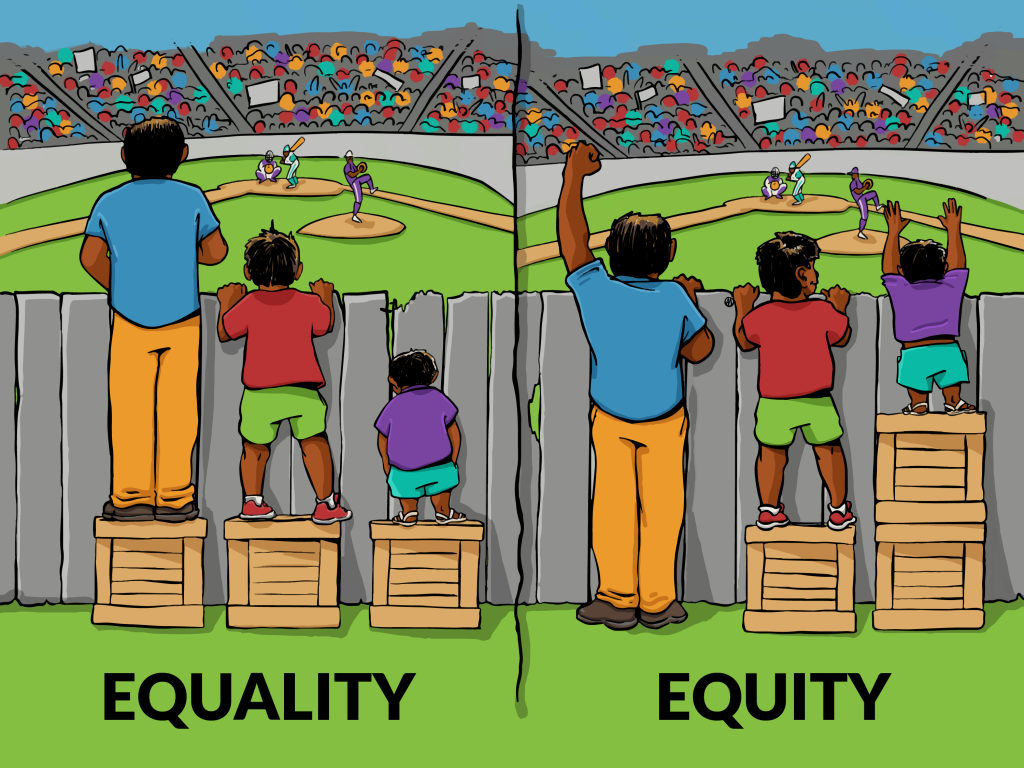
If such a limiting structure exists, could it foreclose whether those tables can ever turn, and the consumer of research ever become the producer?
If countries that mainly consume research decide to become producers of research materials and equipment, can they free up financial resources, or is their expenditure tied to generational cycles of debt trap,
owed to the same parent institutions whose members award global prizes for best in thinking?
In Ghana for example, Education spending slipped from roughly 3.9% of GDP down toward 2.9% in recent years.
Meanwhile, Ghana's Gross Public Debt-to-GDP ratio actually exceeds 100% of government revenue (peaking around 117% in 2022).
In practice, this means Ghana’s government was technically obligated to pay more to its creditors than it collected in total taxes and grants, a mathematical impossibility that forced the immediate “crowding out” of all public sectors.
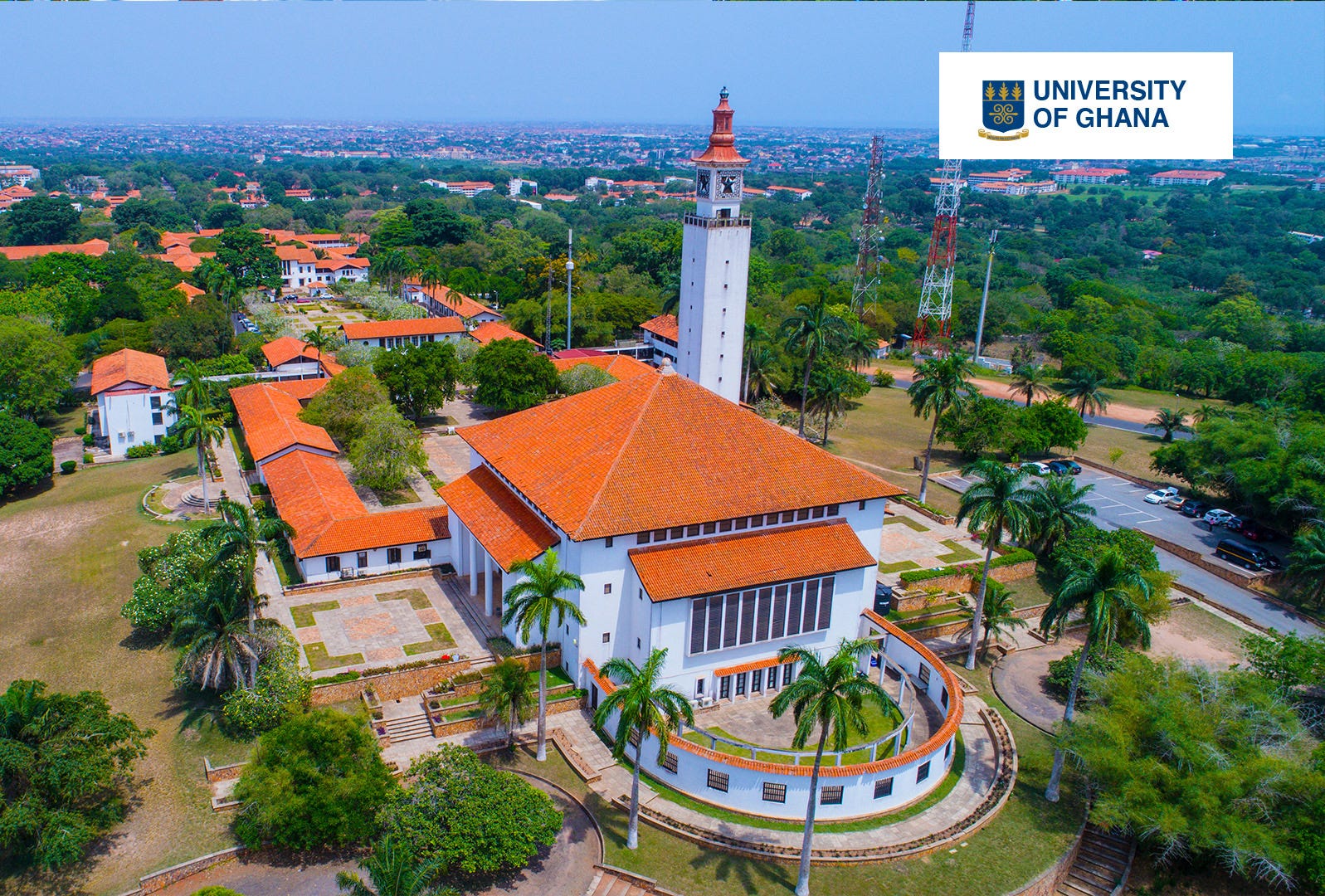
Vicious cycle. Debt obligations mount. Sovereign debt restructuring and IMF bailouts are enforced.
An overwhelming portion of national revenue is diverted away from public services like education or health, to pay domestic and external creditors.
In this scenario, I ask, what would happen if Ghana brilliantly enacted policy to shift away from being a consumer of Europe- or American-research production?
And suddenly, what if Ghana decided to start building robust research infrastructure and institutions, like the new $5 billion Epic Center in Silicon Valley that will be the world's largest semiconductor equipment and R&D facility, speeding up next-gen AI chipmaking?
Or the €8 billion project for advanced clinical trials, medical technology innovations, and personalized medicine commenced in 2020 by the European Commission?
So, when we say periphery versus core, we are also talking about contexts like these. Who gets to produce critical mineral wealth worth $25 trillion?
The answers: Congo. Nigeria. Haiti. South Africa.
But where are the companies that extract and process these sources into global technology giants located? Silicon Valley USA.
Where are the universities that set the standards and produce the knowledge behind this extractive process? Europe and the U.S.
It is interesting to frame the development of very useful technologies as an extractive process, isn’t it?
In fact, development theorists like Walter Rodney of former British colony Guyana, argue that the Industrial Revolution is only the finer side of colonization’s dirty underbelly. Rodney’s classic 1972 book, How Europe Underdeveloped Africa, argues that Africa's economic position is the directly intended consequence of continued European exploitation, and not a natural misfortune, nor the result of “corruption”, nor “bad governance”.
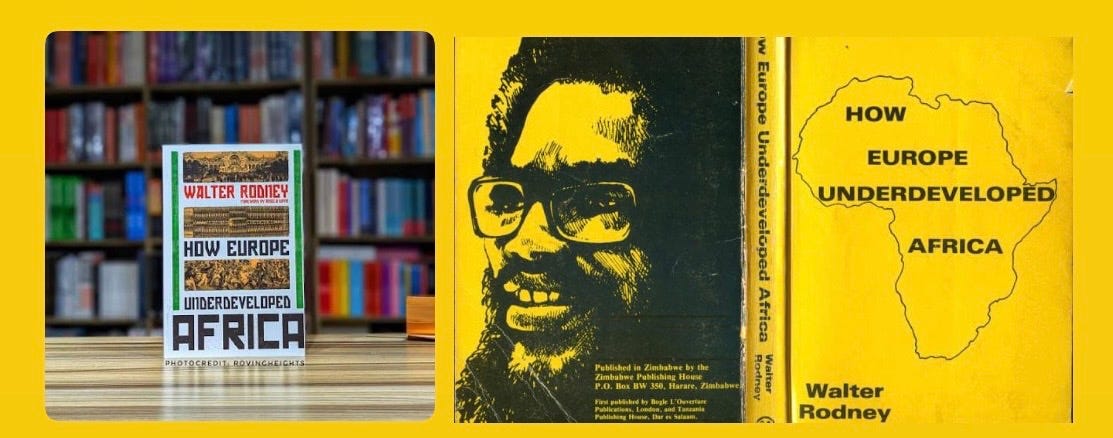
I think, we can agree that the Nobel committee will never award Walter Rodney a prize for this original idea.
On the other hand, very few economists from Africa will ever do research that does not reward them at least financially, if not with western recognition and applause.
This itself, too, is part of my long corridor of chicken and egg questions: will academics in Africa ever be free from chasing the bag and pandering to grants, donors and governments? Do they even want to?
Or are they satisfied to have the kind of social clout I used to enjoy as a member of a professor’s family, before I moved to the colonial core, and that bubble violently blew up, up and away, floating far, far above the steeples and spires of Paris, London and Amsterdam, before ascending into oblivion beyond the temples of Einstein and Nobel in Oslo and Stockholm?
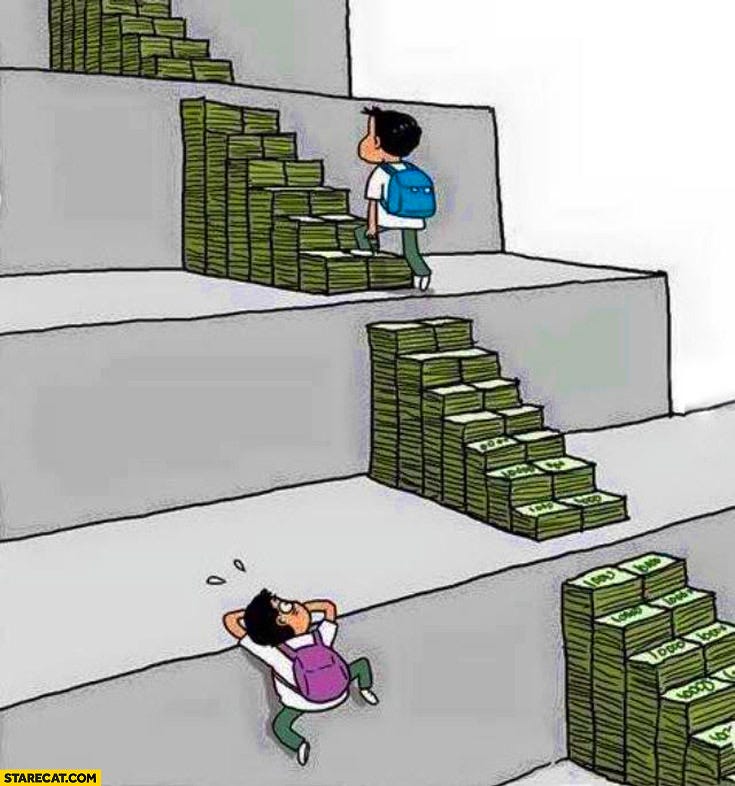
In closing, Ghana was once called the Gold Coast, but is there enough Gold in ghana to pay for a transition from mass consumption of research to original thought production?
Or, do Nigeria, or Haiti have any arsenal to disrupt the global architecture of thought production behind manufacture, and build systems and institutions that free up African thinkers to compete globally?
Do African thinkers want to compete?
Do global gatekeepers expect African thinkers?
And, if African thinkers think original thought, will global awards include ever them?
If I knew the answers, they’d have given me a Nobel prize.
Do you?